Description
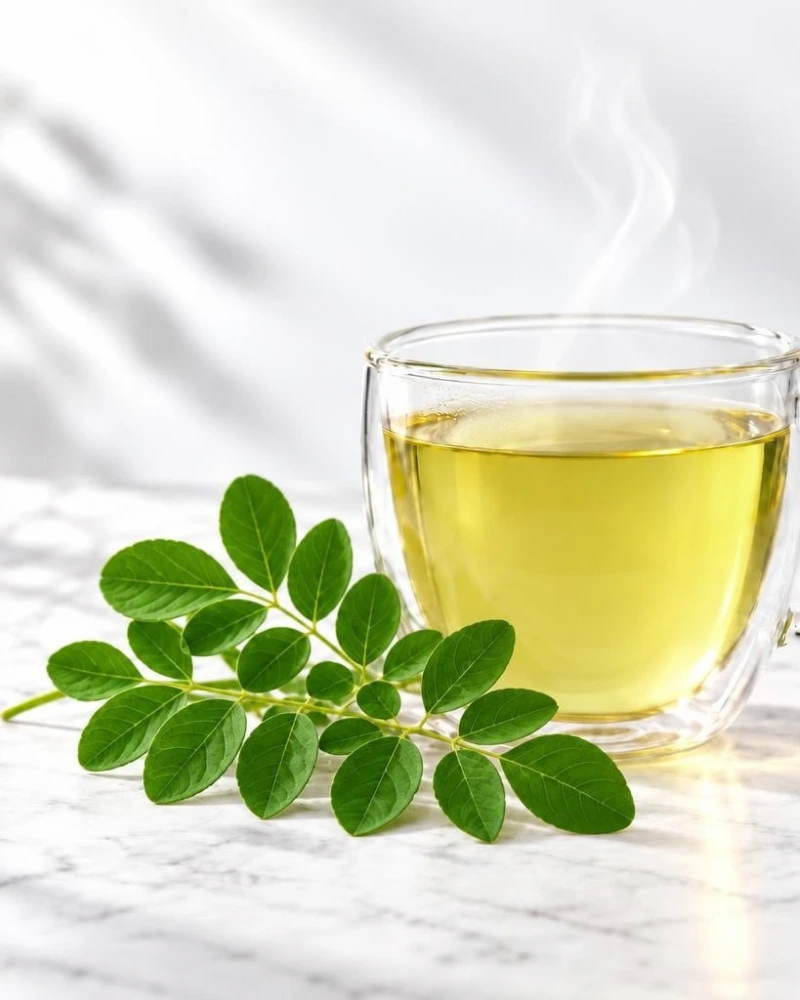
Moringa — murunga in Sinhala, Shigru in Sanskrit — has been revered across Sri Lanka and the wider subcontinent for centuries, so prized that it is often called the “miracle tree.” In Ayurveda it is described as carrying Katu (pungent) and Tikta (bitter) rasa and an Ushna (warming) potency, with an action that pacifies Kapha and Vata dosha.
In this tradition the leaf is valued as a broad tonic for vitality — taken to support immunity, a healthy inflammation response, digestion and energy, and traditionally used to help maintain healthy blood sugar and cholesterol. It is one of the defining greens of kola kanda, the island’s nourishing herbal porridge, and a staple of the Sri Lankan home garden.
What sets Sri Lankan moringa apart is its home-garden heritage and the island’s ideal growing conditions. The leaf is hand-picked and gently dehydrated to hold its colour, aroma and nutrient character — an everyday plant carrying an extraordinary depth of nourishment and tradition.
How to Use
As a herbal tea: Steep 1 teaspoon (about 2g) of the tea cut in a cup of freshly boiled water for 5–7 minutes, then strain. Naturally caffeine-free.
Blend it: Pairs well with lemongrass, ginger or a little honey to soften the earthy notes.
Kola kanda & cooking: Add to the island’s traditional herbal porridge, or steep and use the infusion as a base for soups and broths.
Cold infusion: Steep in cool water for several hours in the fridge for a lighter, refreshing drink.
Health Benefits
Nutritional support: A naturally rich source of vitamins, minerals and amino acids — traditionally valued to nourish and sustain overall wellbeing.
Immune support: Long taken in traditional practice to strengthen the body’s resistance.
Healthy inflammation response: Traditionally valued to support the body’s natural inflammation balance.
Blood sugar & cholesterol: Traditionally used to help maintain healthy blood sugar and cholesterol. If you take medication for diabetes, consult your doctor before regular use.
Antioxidant richness: A natural source of antioxidant compounds.
Sources: Representative research: Fuglie, The Miracle Tree: Moringa oleifera (1999); reviews of M. oleifera anti-inflammatory and hypoglycaemic activity.
Sourcing
Moringa grows in home gardens across Sri Lanka — one of the most common dooryard trees on the island. We source from home gardens and small farmers, hand-picked and gently dehydrated. Much of this produce is naturally free of chemical inputs but not yet connected to organic networks; supporting these growers is part of our ongoing Regenerative Agriculture pilot.