


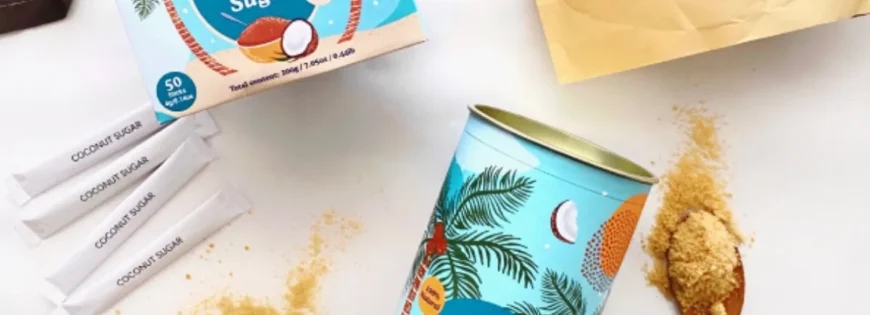
Ask most people where sugar comes from and they will say sugar cane. In Sri Lanka, there is another answer, and it starts high up in a coconut palm, in a flower that never gets the chance to become a coconut.
Coconut sugar is made from the sap of the coconut flower. The sap is collected from the cut flower bud, heated until its water evaporates, and stirred until it thickens and crystallises into a golden-brown sugar. Nothing is added. This guide covers how it is made, what the glycemic index numbers say, and how coconut sugar compares with brown sugar, white sugar and the jaggery Sri Lankans have used for generations.
Sri Lanka and the coconut palm
Sri Lankans eat more coconut per person than anyone else in the world, around 110 nuts a year each. The island’s coconuts are prized abroad for their rich taste and texture, and the industry is overseen by the Coconut Development Authority, the statutory body that sets quality standards for coconut products made in or exported from Sri Lanka.
The palm gives more than its nuts. Its flower gives sap, and that sap has long been boiled down into pol pani (coconut treacle) and pol hakuru (coconut jaggery). Coconut sugar is the same sap, taken one step further.
How is coconut sugar made? Four steps from flower to cup
- Tapping the flower. A tapper climbs the palm and cuts the unopened flower bud. Sweet sap, pol ra, drips into a collecting pot. Freshly drawn, it is called thelijja.
- Heating the sap. Fresh sap is about 80% water. It is heated so the water evaporates, and stirred so the sugars caramelise evenly without burning.
- Crystallising. As the syrup thickens, it begins to crystallise. At the right point it is taken off the heat to cool and set.
- Granulating. The set sugar is broken and sieved into fine granules that pour and measure like ordinary sugar.
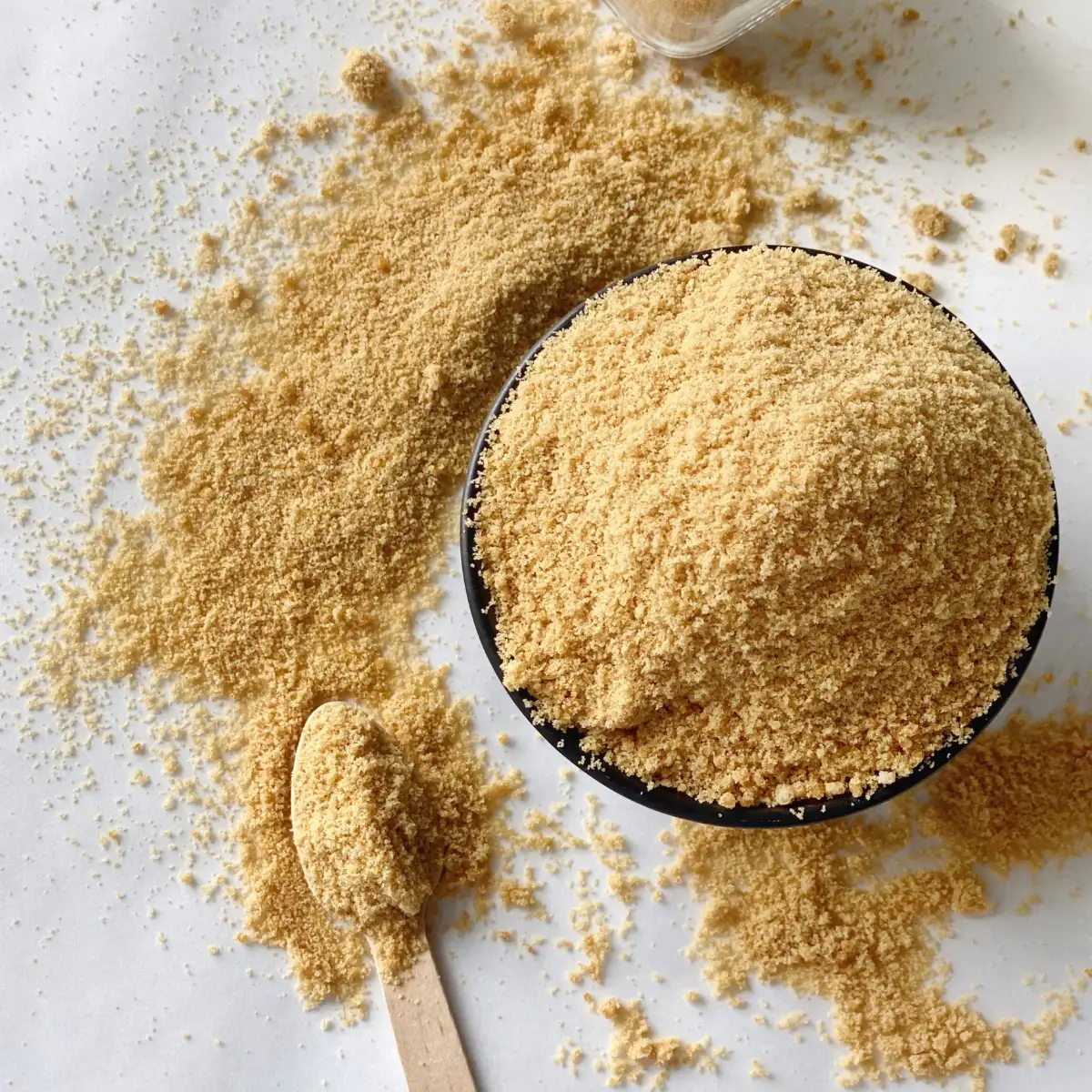
How long the sap is heated, and how far it caramelises, decides the colour and taste. Lighter coconut sugars, like Goodfolks, are mild, earthy and smooth. Darker ones taste more of caramel and deepen the colour of what they go into.
Coconut sugar glycemic index: 35 or 54?
The glycemic index (GI) ranks how quickly a food raises blood sugar. A GI of 55 or less is low; table sugar sits around 65.
You will see two numbers for coconut sugar. A GI of 35 is widely quoted, but it comes from a single small study. The University of Sydney’s Glycemic Index Research Service, which tests foods using the international standard method, measured coconut sugar at GI 54. That is still low, at the top of the low band. We use 54 because it comes from the standard test.
Low GI does not mean low sugar. Coconut sugar has about the same energy as cane sugar, so enjoy it in sensible amounts.
Is coconut sugar healthy?
It is a better choice than refined sugar, for three reasons.
- Lower GI: 54, against about 65 for table sugar.
- Unrefined: it is never bleached or stripped, so it keeps the natural trace minerals of coconut sap, including potassium.
- One ingredient: good coconut sugar is just coconut sugar, with nothing added.
It is not a supplement. It is simply a less processed sugar.
Coconut sugar vs brown sugar vs white sugar
| Coconut sugar | Brown sugar | White sugar | |
| Made from | Coconut flower sap | Sugar cane, refined, molasses added back | Sugar cane or beet, fully refined |
| Glycemic index | 54 (low) | About 64 | About 65 (medium) |
| Minerals | Natural trace minerals, incl. potassium | Small amounts | Virtually none |
| Taste | Mild and earthy to deep caramel, depending on how dark | Molasses | Plain sweet |
Coconut sugar vs jaggery
Jaggery is the older cousin. In Sri Lanka, palm sap is boiled down and set in moulds, often half coconut shells, to make hakuru. Coconut jaggery comes from the coconut palm; kithul jaggery comes from the kithul (fishtail) palm. It is still common to be served a piece of jaggery with plain tea.
Coconut sugar comes from the same coconut-sap tradition as pol hakuru, but it is granulated, so it spoons, measures and dissolves like ordinary sugar. That makes it the easier everyday swap.
How to swap coconut sugar for sugar
- Baking: use 1:1 for white or brown sugar. Light coconut sugar keeps bakes pale; dark coconut sugar gives a deeper colour and caramel note.
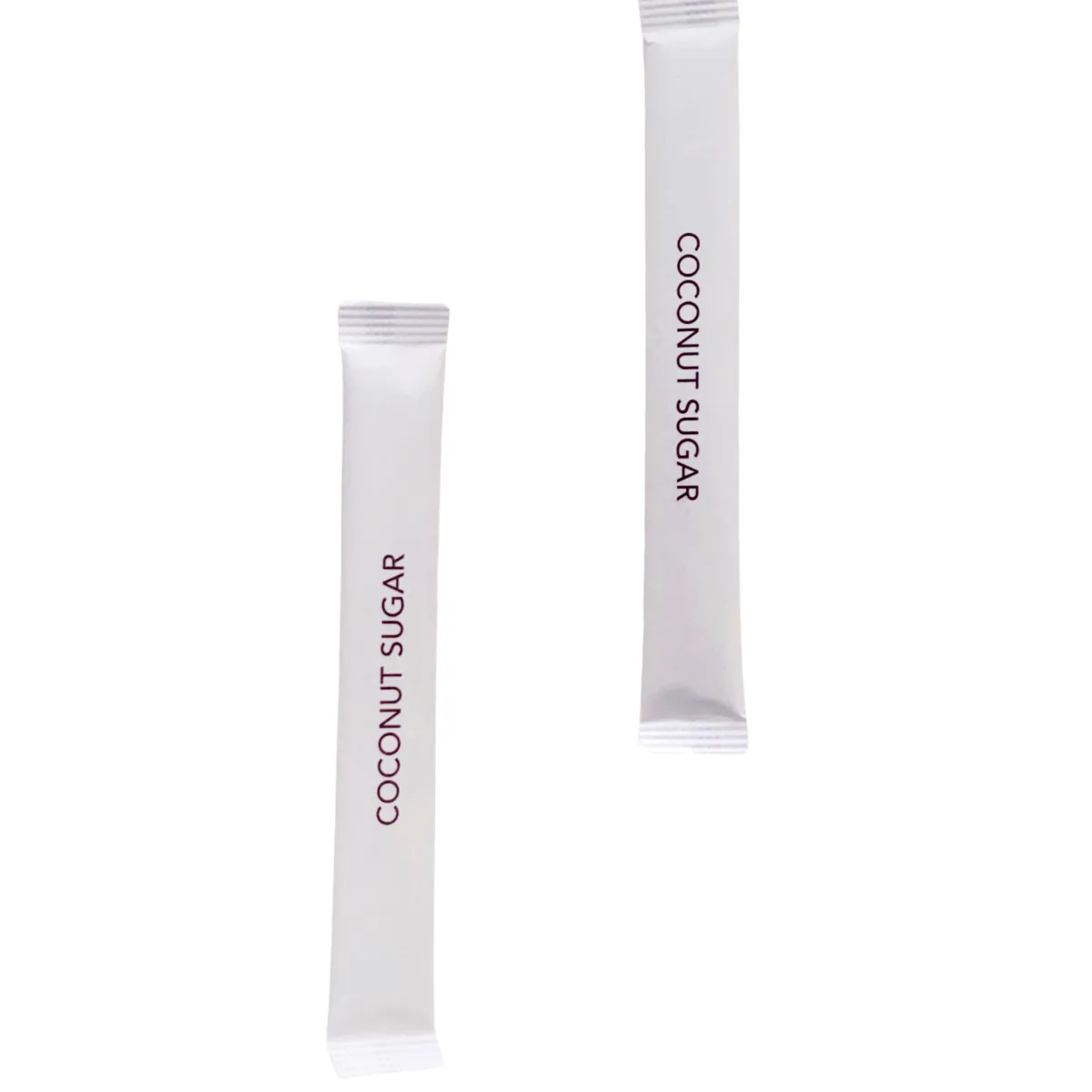
- Tea and coffee: one 4 g sachet, about a level teaspoon, sweetens one cup.
- Cooking: add a spoon to curries, sambols, marinades and dressings to balance spice and sourness.
- Toppings: sprinkle over porridge, yoghurt, pancakes or fruit.
Where to buy coconut sugar from Sri Lanka
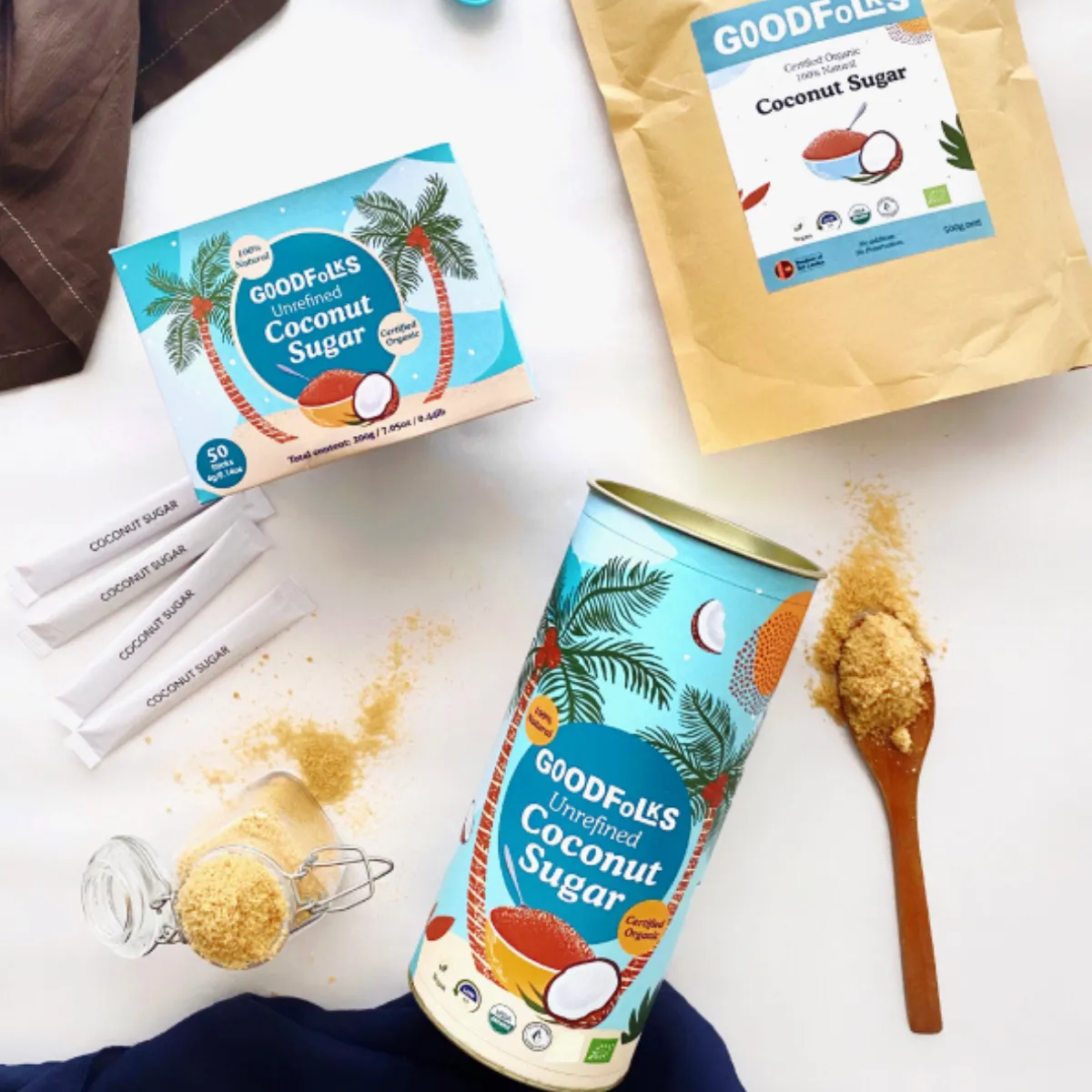
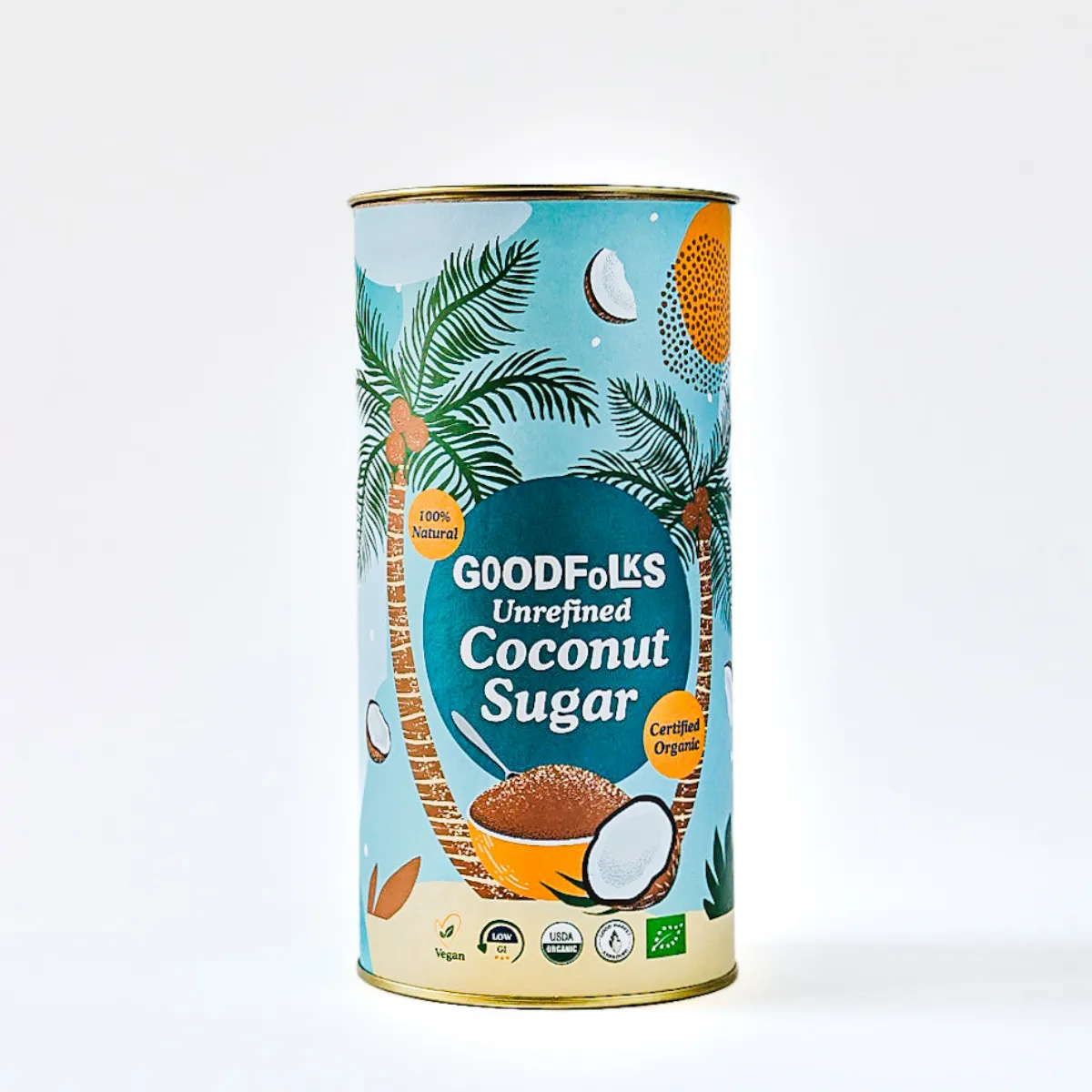
Goodfolks Organic Coconut Sugar is certified organic (USDA), lab tested and made in Sri Lanka from coconut flower sap. It is mild, earthy and smooth, in a 500 g canister, a 1 kg refill, and 4 g sachets for home, office and hospitality. Learn more about Goodfolks coconut sugar or buy it on JOYUS. International shipping available.
Buying in bulk for a business? Get a quote for bulk orders from Goodfolks.
Sources
- University of Sydney Glycemic Index Research Service — coconut sugar GI 54 (as cited in Wikipedia, ‘Coconut sugar’)
- Sugar Australia — Different types of sweetener (coconut sugar GI 54; sugar GI 65)
- Asghar et al. (2020), Coconut sap as a potential source of sugar: antioxidant and nutritional properties, Food Science & Nutrition 8(4)
- Coconut Development Authority of Sri Lanka (statutory body, Coconut Development Act No. 46 of 1971; sets quality standards for coconut products made in or exported from Sri Lanka)
- Sri Lanka Export Development Board — Coconut kernel products (Sri Lankan desiccated coconut: rich taste and texture)
- Sri Lanka Export Development Board — Different uses of coconut (sap collected, boiled and concentrated into jaggery, coconut sugar and treacle)
- CORD / International Coconut Community journal — Sri Lanka has the highest per-capita coconut consumption (~110 nuts per person per year)
- NPR — Sri Lanka’s kithul palm syrup (jaggery set in coconut-shell moulds; jaggery used in place of sugar with tea)
- SBS Food — coconut palm sap is about 80% water and is boiled to evaporate it