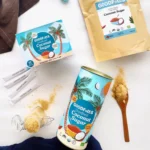
Order curd in Sri Lanka and you will be asked a question: treacle? Say yes, and the next question is which one. Coconut or kithul?
Coconut treacle and kithul treacle are both syrups boiled down from the sap of tapped palm blossoms, but from two different palms. Coconut treacle comes from the coconut palm and is the everyday treacle of Sri Lankan homes. Kithul treacle comes from the kithul, or fishtail, palm; it is rarer, deeper in taste, valued in Ayurveda and priced to match. This guide explains how each is made, how they taste, what they are called around the world, and which to reach for.
What is treacle in Sri Lanka?
In Britain, treacle is a by-product of refining cane sugar. In Sri Lanka it means something quite different: a syrup made from the sap of tapped palm blossoms, usually coconut or kithul. It is poured over curd, cooked into sweets and stirred into tea.
Coconut treacle: Sri Lanka’s everyday treacle
Coconut treacle is known as pol pani in Sinhala and thengai paagu (தேங்காய் பாகு) in Tamil. Outside Sri Lanka it is usually sold as coconut syrup, coconut nectar or coconut blossom nectar.
Most of it comes from Sri Lanka’s Coconut Triangle, the districts of Kurunegala, Puttalam and Chilaw. Tappers climb the palms and cut the unopened flower bud; the sweet sap that drips out, called thelijja, is collected and boiled down. It takes six to eight bottles of sap to make one bottle of treacle.
Coconut treacle is caramel-rich, with subtle coconutty richness. It is the treacle most Sri Lankan homes reach for: more affordable than kithul, and the one cooked with grated coconut into pani pol, the filling for lavariya.
Kithul treacle: the rarer treacle
Kithul treacle comes from the kithul or fishtail palm (Caryota urens), a tall palm of Sri Lanka’s forests and home gardens. Tapping kithul is a craft of its own: in 2025 UNESCO inscribed Kithul Madeema / Kithul Kapeema on its Representative List of the Intangible Cultural Heritage of Humanity.
Kithul treacle is deeper and earthier than coconut treacle, often described as date-like. It is valued in Ayurveda, and it costs more.
Coconut treacle vs kithul treacle at a glance
| Coconut treacle | Kithul treacle | |
| Palm | Coconut (Cocos nucifera) | Kithul, the fishtail palm (Caryota urens) |
| Local names | Pol pani (Sinhala), thengai paagu (Tamil) | Kithul pani |
| Also sold as | Coconut syrup, coconut nectar, coconut blossom nectar | Kithul syrup, kithul honey |
| Taste | Caramel-rich, subtle coconutty richness | Deep, earthy, often described as date-like |
| Traditional role | The everyday treacle: curd, pani pol, sweets | Valued in Ayurveda; the rarer treacle |
| Price | More affordable | Higher |
Is coconut treacle low GI?
Yes. A 2024 Sri Lankan study measured coconut treacle at GI 53.6 in 30 healthy adults, in the low band (55 or less). A Thai study of organic coconut flower syrup found GI 51. Table sugar is around 65. Treacle is still sugar, about two-thirds sugar by weight, so enjoy it as part of a balanced diet.
Coconut treacle vs maple syrup, honey, agave and date syrup
Coconut treacle sits in a family of natural liquid sweeteners. Here is how it compares with the ones you are most likely to have in the cupboard.
| Comes from | Glycemic index (GI) | Taste | |
| Coconut treacle | Coconut flower sap, Sri Lanka | 53.6, low | Caramel-rich, subtle coconutty richness |
| Kithul treacle | Kithul (fishtail) palm sap, Sri Lanka | No published human GI study we could verify | Deep, earthy, date-like |
| Maple syrup | Maple tree sap, Canada and the US | 54, low | Woody, caramel |
| Honey | Bees, from flower nectar | 50–65, varies by type | Floral; varies by flower |
| Agave syrup | Agave plant, Mexico | Low, because it is mostly fructose | Neutral, very sweet |
| Date syrup | Dates | 55 in one study, low | Rich, fruity, caramelised |
| Table sugar | Sugar cane or beet, refined | about 65, medium | Plain sweet |
Two things to keep in mind. GI values vary with the product and how it is made, so treat them as a guide rather than a guarantee. And a low GI is not the whole story: agave scores low because it is mostly fructose, which the body handles differently. All of these are still sugars, so enjoy them in sensible amounts.
Where coconut treacle stands out is in the kitchen. It pours like maple syrup and brings a caramel depth that honey and agave do not.
Which treacle should you use?
- Curd and treacle: either. Coconut for an everyday bowl, kithul for a treat.
- Pani pol and lavariya: coconut treacle.
- Pancakes, porridge, baking and coffee: coconut treacle, used like maple syrup or honey.
- When you want the deepest, most traditional flavour: kithul.
Where to buy coconut treacle and kithul treacle
Goodfolks makes both. Goodfolks Organic Coconut Treacle is certified organic (USDA) and lab tested, in a 350 ml glass bottle. Goodfolks Premium Kithul Treacle is the deeper, rarer choice. Both are sold on JOYUS, our online store, with island-wide delivery and international shipping. Read more on our coconut treacle page, or find Goodfolks at our stockists across Sri Lanka.
Sources
- Litha et al. (2024), Sri Lankan Journal of Applied Sciences 3(1): 50–55 — coconut treacle GI 53.6
- Leelayuwat et al. (2018), Asia-Pacific Journal of Science and Technology 23(4) — organic coconut flower syrup GI 51
- Sugar Australia — sugar GI 65
- Sunday Observer (2021), A Treacle Tale: Coconut Treacle
- Wikipedia — List of Sri Lankan sweets and desserts
- Wikipedia — Caryota urens
- UNESCO Intangible Cultural Heritage — Kithul Madeema / Kithul Kapeema (inscribed 2025)
- Glycemic Index Foundation, University of Sydney — Q&A with Jennie Brand-Miller (maple syrup GI 54)
- Catherine Saxelby, Foodwatch — Are syrups better for you than sugar? (honey GI 50–65; agave mostly fructose)
- Foods (2023) 12(6): 1268 — date syrup GI 55