The Heritage Range · Sri Lanka
Before it disappears.
If you tasted kithul at our stand at Global Food Week, you may have been surprised: earthy, smoky, deeply layered, and nothing like maple, agave or date syrup. Real kithul is now so hard to find that even in Sri Lanka, people argue over whether what they’re eating is genuine. This is the story of why.
A palm, a flower, a climb
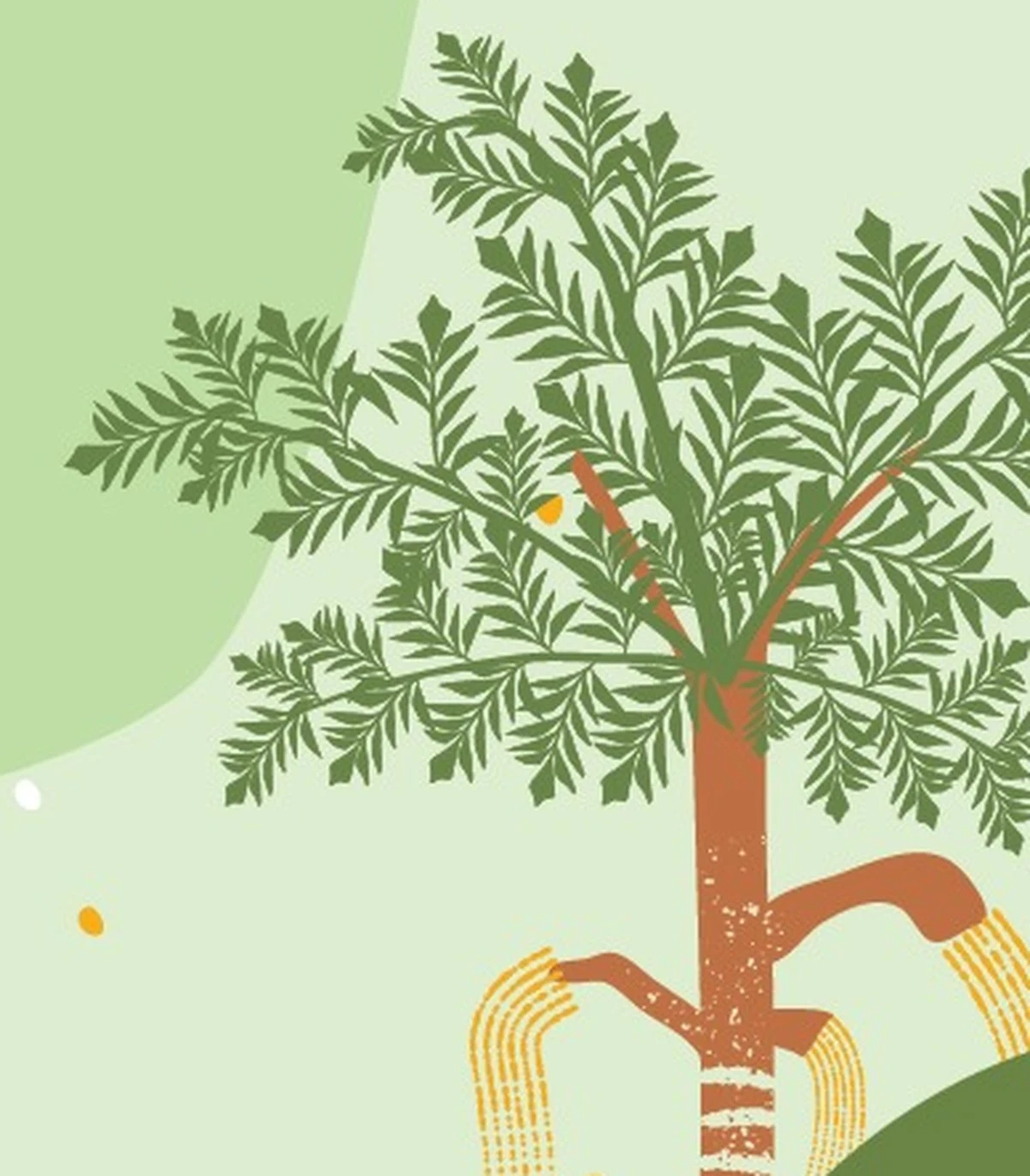
Kithul comes from Caryota urens, the fishtail palm that grows in Sri Lanka’s wet-zone forests and home gardens. Our kithul comes from the districts of Ratnapura, Kegalle, Kandy and Kalutara.
The sap is drawn from the palm’s flower, high in the crown. Tappers climb the palms every day, often on simple bamboo ladders. Before a flower will give, it has to be “seasoned”: warmed, gently beaten and treated with herbal pastes whose recipes pass down through families. Mastering it can take up to 15 years[2]. It is dangerous, patient, exhausting work.
Precious, and fragile
Fresh sap begins to ferment within hours. Tappers line their collection pots with a little slaked lime to slow it down, and the sap must be boiled down the same day[3]. Nothing about it is uniform. The same tree, even the same flower, can give sap that shifts in colour and taste as the harvest goes on. That variation is part of its character.
In Ayurveda and Hela Vedakama, kithul has long been valued as both medicine and natural sweetener. Science is now taking a look too: a 2022 study in the Ceylon Medical Journal measured kithul treacle at a glycemic index of 35, which places it in the low-GI range[4].
One tree. A whole life.
The kithul palm flowers from the top of the trunk downwards and, once it has flowered, it dies. Every part of that life is put to use.

Kithul Treacle
Sap drawn from the flower, boiled down the same day before it can ferment.
Earthy, smoky, layered. Measured at GI 35.
Kithul Jaggery
Boiled further and stirred, then set in coconut shells.
Fudge-like, with deep caramel and smoke.
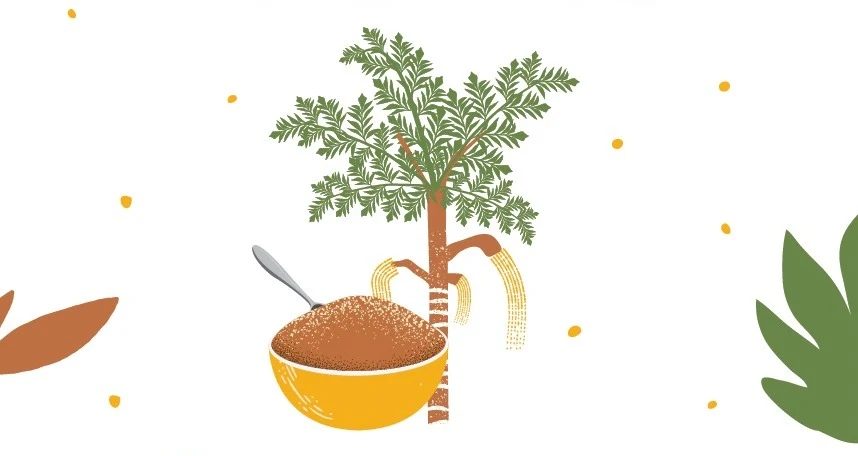
Kithul Flour
When the palm’s life ends, its trunk pith is pounded, washed, settled and sun-dried.
Traditional for porridge and island sweets.
Why real kithul became so rare
As demand grew, large-scale producers began making cheaper syrups, and adding sugar or water became common[5]. Prices fell, and the true tappers found it ever harder to earn a living. Fewer young people want to learn the climb[3]. The result: genuine kithul has become one of the hardest things in Sri Lanka to buy with confidence.
A delicacy reawakening
And yet kithul is having a moment. Chefs and bartenders far from Sri Lanka have discovered just how different it is.
“When the kithul is pure and done right, it is characterized by a depth of flavor ranging from smoky to savory.”
Samantha Fore, chef · The Washington Post, 2021
“In the same way you have industrial honeys and small honeys, it’s the same with industrial kithul.”
Ryan Chetiyawardana, award-winning bartender · The Washington Post, 2021
“It takes a lot of work to be able to get the sap and boil it down.”
Amanda Kiessel, founder, Good Market · NPR, 2017
We think that recognition is how this craft survives. When kithul is valued as a gourmet ingredient, the people who climb the trees can be paid what the work is worth.
Heritage on film
In our documentary series A Forest Full of Medicine, an Ayurveda physician and a leader of the Vedda, Sri Lanka’s indigenous forest people, share what the forest has always given them.
Taste it. Stock it. Keep it alive.
For gourmet retail, chefs, hotels, cafés and gifting: kithul treacle, jaggery and flour, in retail packs, bulk supply and custom formats.
At Global Food Week 2026: taste kithul treacle and jaggery at the Sri Lanka Pavilion, Booth 7-060 · 6–8 October · ADNEC Abu Dhabi.
عذرًا على عربيتنا المتواضعة، فكل ما في الأمر أننا متشوّقون لتعرفوا قصتنا.
تذوّقوه، قبل أن يندثر.
إذا تذوّقتم الكيتول في جناحنا، فلعلّكم فوجئتم: ترابيّ ودخانيّ متعدّد الطبقات، ولا يشبه شراب القيقب أو الأغافي أو الدبس. وقد صار الكيتول الحقيقي نادرًا إلى حدّ أن السريلانكيين أنفسهم يتجادلون حول أصالة ما يتذوّقونه.
عسل الكيتول مُدرَج في «سفينة التذوّق» لحركة سلو فود: أطعمة مهدّدة بالاندثار.
حرفة خطرة تتطلّب الصبر
يُستخرج النسغ من زهرة النخلة في أعلاها. يتسلّق الجامعون النخيل يوميًا على سلالم من الخيزران، ويهيّئون الزهرة بالحرارة والطَّرق ووصفات عشبية عائلية، وهي مهارة قد يستغرق إتقانها 15 عامًا. يبدأ النسغ بالتخمّر خلال ساعات، لذا يُغلى في اليوم نفسه، ولا يتشابه حصادان أبدًا.
تعدّه الأيورفيدا وهيلا فيداكاما دواءً ومُحلّيًا طبيعيًا، وقد قاست دراسة نُشرت عام 2022 في المجلة الطبية السيلانية مؤشّره الجلايسيمي بـ 35، أي ضمن الفئة المنخفضة.
شجرة واحدة، وحياة كاملة
- عسل الكيتول (من الزهرة): نسغٌ يُستخرج من الزهرة ويُغلى في اليوم نفسه قبل أن يتخمّر. ترابيّ ودخانيّ متعدّد الطبقات. مؤشّره الجلايسيمي 35.
- سكّر الكيتول (من النسغ نفسه): يُغلى أكثر مع التحريك، ثم يُصبّ في أنصاف جوز الهند ليتصلّب. قوامٌ يشبه الفدج، بكراميل عميق ولمسة دخان.
- دقيق الكيتول (من قلب الشجرة): حين تنتهي حياة النخلة، يُدقّ لبّ جذعها ويُغسل ويُترك ليترسّب ثم يُجفَّف تحت الشمس. تقليديّ للعصيدة والحلويات المحلية.
لماذا أصبح نادرًا؟
أضرّت الأشربة المصنّعة الرخيصة والسكّر المضاف بالجامعين الحقيقيين، وقلّ عدد الشباب الذين يتعلّمون الحرفة. واليوم يكتشفه الطهاة حول العالم، وكلّ عبوة تساعد على إبقاء حرفة عمرها قرون حيّة.
تذوّقوا عسل الكيتول وسكّره في الجناح السريلانكي، المنصة 7-060. للاستفسارات التجارية: واتساب +94 74 000 8248
Sources
- Slow Food Foundation for Biodiversity, Ark of Taste: Sri Lanka
- Daily FT, Sri Lanka’s ‘Kithul’ palm syrup: an ancient sweetener in need of saving (NPR, 2017)
- Sunday Observer, Kithul: tapping and processing
- Weeraratne & Ekanayake (2022), Kithul (Caryota urens) treacle: a healthy natural sweetener?, Ceylon Medical Journal
- Seneviratne & Dissanayake (2016), A study on the practice of adulteration of Kitul sap products in Sri Lanka, Sri Lanka Journal of Social Sciences
- Wijesinghe et al. (2015), Kithul Flour (Caryota urens) as a Potential Flour Source for Food Industry, University of Sri Jayewardenepura
- Quotes: The Washington Post, 2021; NPR, 2017