

Description
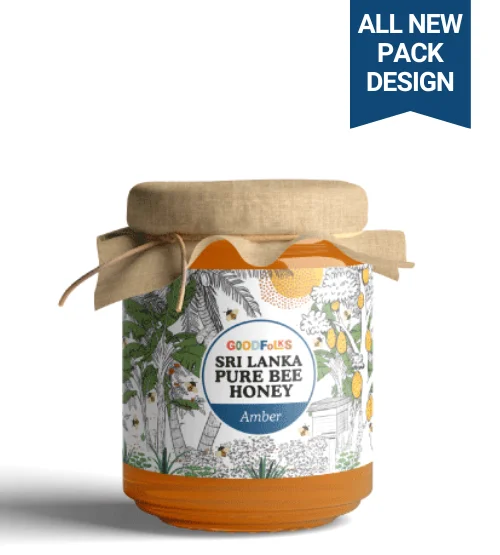
Amber — the fruity, balanced heart, from the Uva highlands
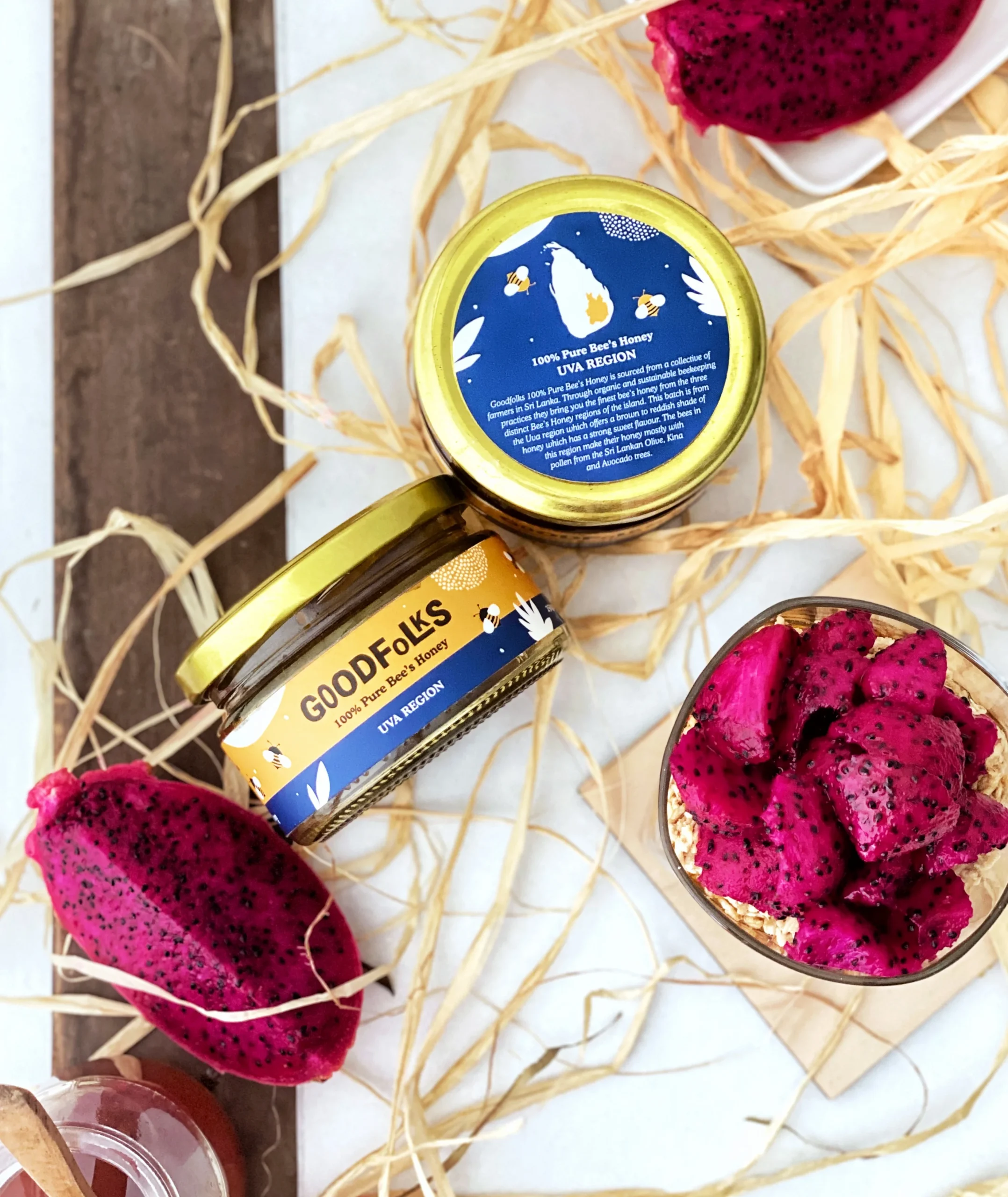
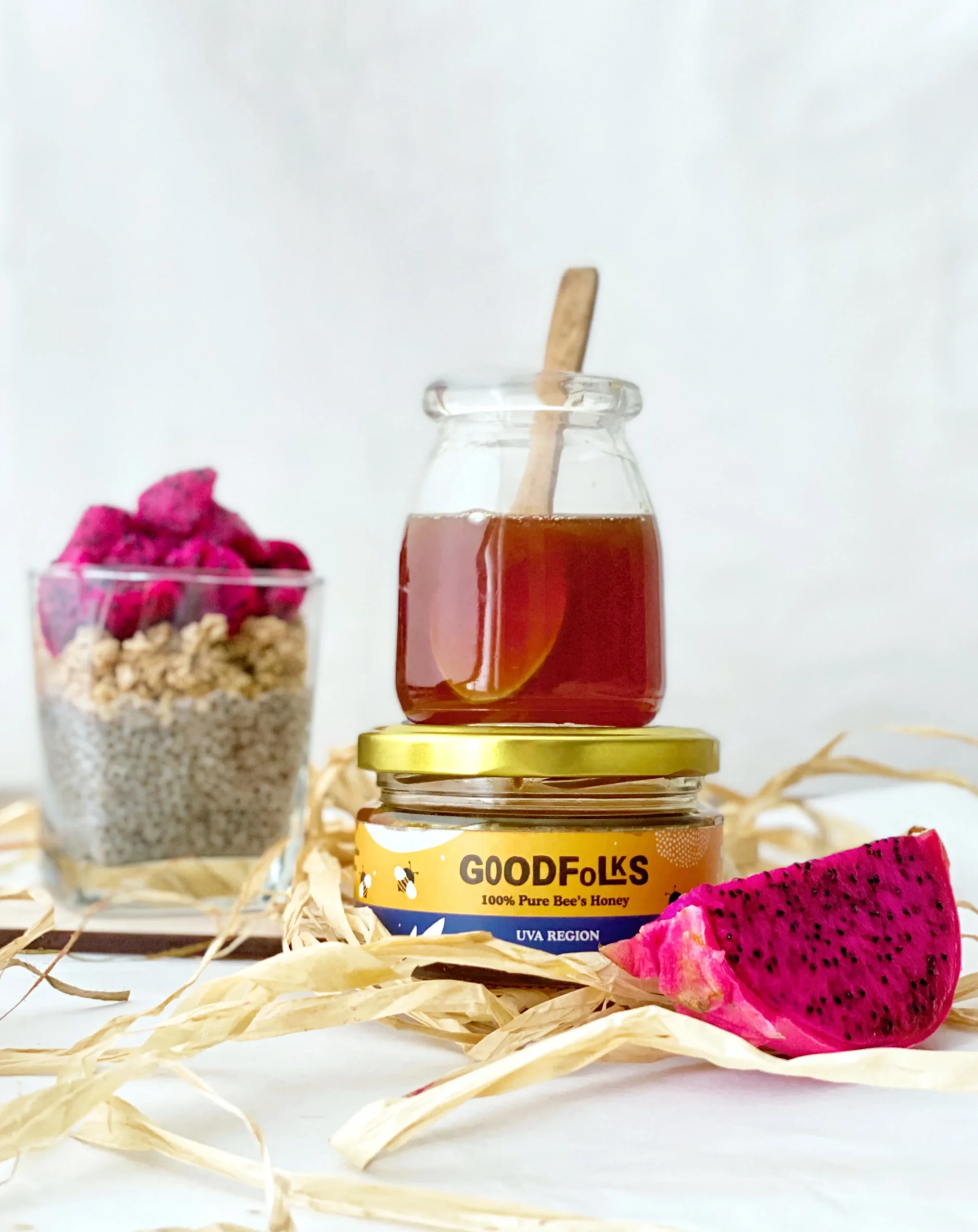
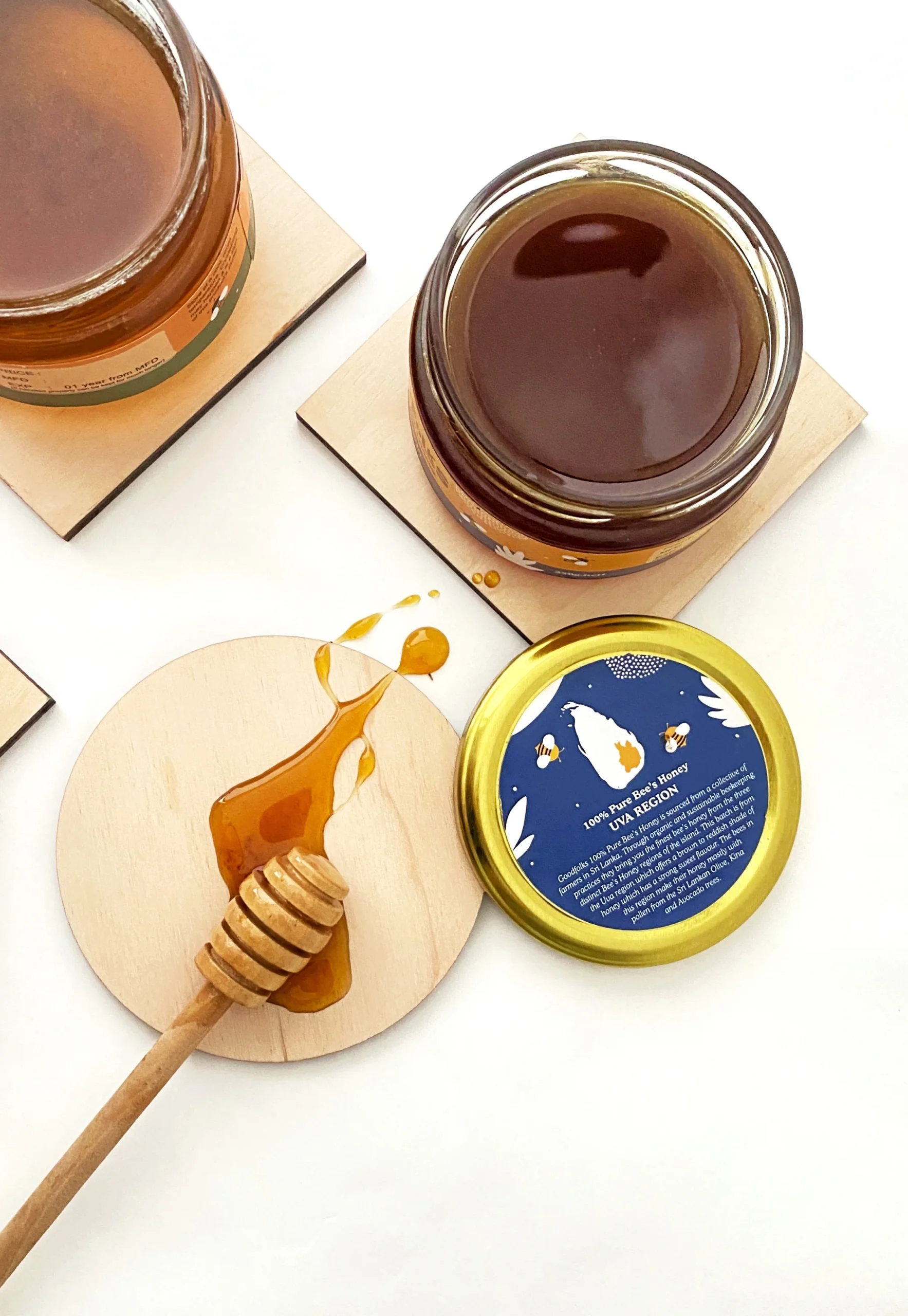
The mountainous Uva region — which may include Badulla, Nuwara Eliya, Monaragala and Ampara for this variant — is Sri Lanka’s cool hill country, thick with highland forest and fruit orchards. Its bees draw on mountain trees and the region’s abundant fruit blossom, giving Amber its signature fruitiness — a warm, balanced honey with a distinct aroma of pear and wildflower. Like every honey in the collection, it is rich with medicinal-plant pollen; Amber simply wears it as the fruity, everyday heart of the three.
Because our bees take from whatever medicinal trees are in bloom, no two batches are identical — each jar is a true record of its place and season. We don’t chase a uniform, homogenised honey; we celebrate the difference.
A note on the collection: Before 2020, Sri Lankan honey was sold as one undifferentiated product — one label, one price, no provenance. Goodfolks changed that, introducing the island’s first honey collection named by region. The conversation has moved since; we’re proud to have started it.
The truth behind all three regional varieties
Sri Lanka is one of the most biodiverse places on Earth — a recognised global biodiversity hotspot where close to 4,000 species of flowering plants grow, nearly 900 of them found nowhere else on the planet, packed into a small island. Few places weave plant life so densely. And because this island’s flora is bound up with a living, nationally recognised medical heritage, a great many of those plants are themselves medicinal.
This is what sets Sri Lankan bee honey apart. Where many honeys carry the character of just a handful of plants, Sri Lankan bees draw on hundreds of nectar sources — complex, nutrient-rich, and often medicinal. The result is honey that genuinely packs a punch: poly-floral, layered, and unrepeatable.
And we take it without ever taking from the wild. Stripping honey from wild colonies puts real stress on fragile forests; we don’t do it. Our farmer network keeps hives in home gardens and forest buffer zones, where the bees work amid this extraordinary plant life — protecting the wilderness even as it enriches the honey.
Here, honey is not a commodity. It is medicine, heritage, and survival. In Ayurveda and in Deshiya Chikitsa — Sri Lanka’s own indigenous medicine, carried down through generations and recognised by the state under the Department of Ayurveda — honey (mee pani) is among the most revered substances in the Ayurveda medicine cabinet. To the traditions of this island, honey is not a sweetener — it is a vehicle of healing. We say this plainly, as our healers always have.
And the bee sits at the very centre of these communities’ existence — not as a trade, but as a lifeline. The wilderness that has sheltered and fed Sri Lanka’s rural and indigenous people for thousands of years depends on the bee: the island’s agriculture, its forests, its biodiversity all turn on pollination, and the bee is its keeper. This is the circle we produce within — where people, plants and pollinators are held together, and farmers are the authors of the story, never its afterthought.
We are not here to replace the honeys the world already treasures — we are here to add one it has never tasted: the living island itself.