Home Garden Collection · Sri Lanka
A whole island.
If you tasted our honey at Global Food Week, you may have noticed something: our three honeys don’t taste alike. One is dark and bold with a bitter edge, one is fruity and rounded, one is pale, silky and delicate. Same island. Same bee. Three completely different honeys. Here’s why.
An island in a jar
Sri Lanka is small, about the size of Ireland, yet it sits inside one of the world’s 36 recognised biodiversity hotspots, the Western Ghats and Sri Lanka[1]. The island holds more than 3,000 native flowering plants, and nearly a quarter of them grow nowhere else on Earth[2][3]. Botanists count some 1,430 of the island’s plants as having medicinal value[4].
Our bees don’t work a single crop. They move freely between forest trees, home-garden fruit trees, herbs, bushes and vines, taking from whatever is in bloom. What ends up in the jar is a small record of that landscape.
Three regions. Three raw honeys.
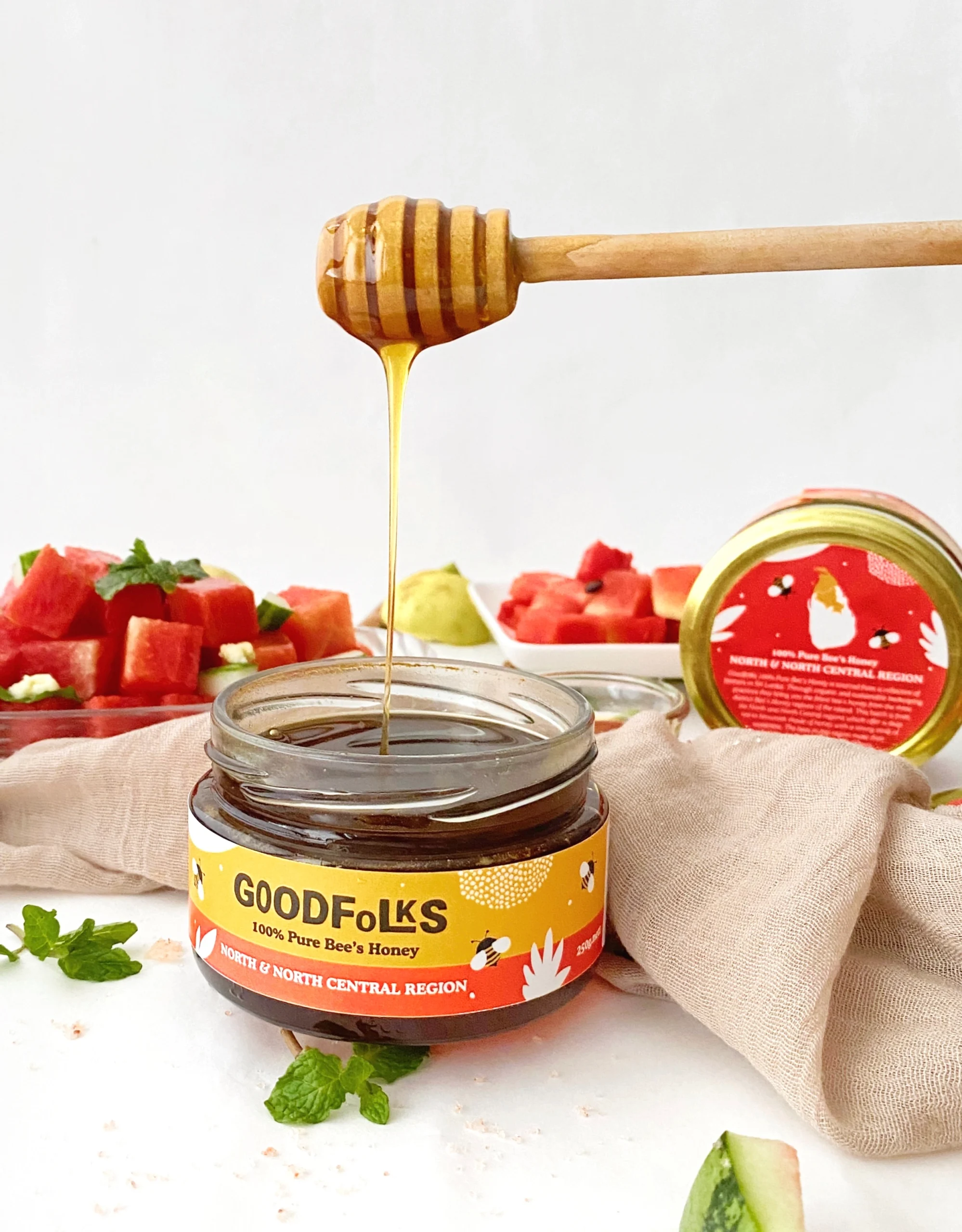
Dark
Ancient, sun-baked country of Weera, Palu and Kumbuk trees. Earthy and intense, with a signature bitter finish. Year-round.
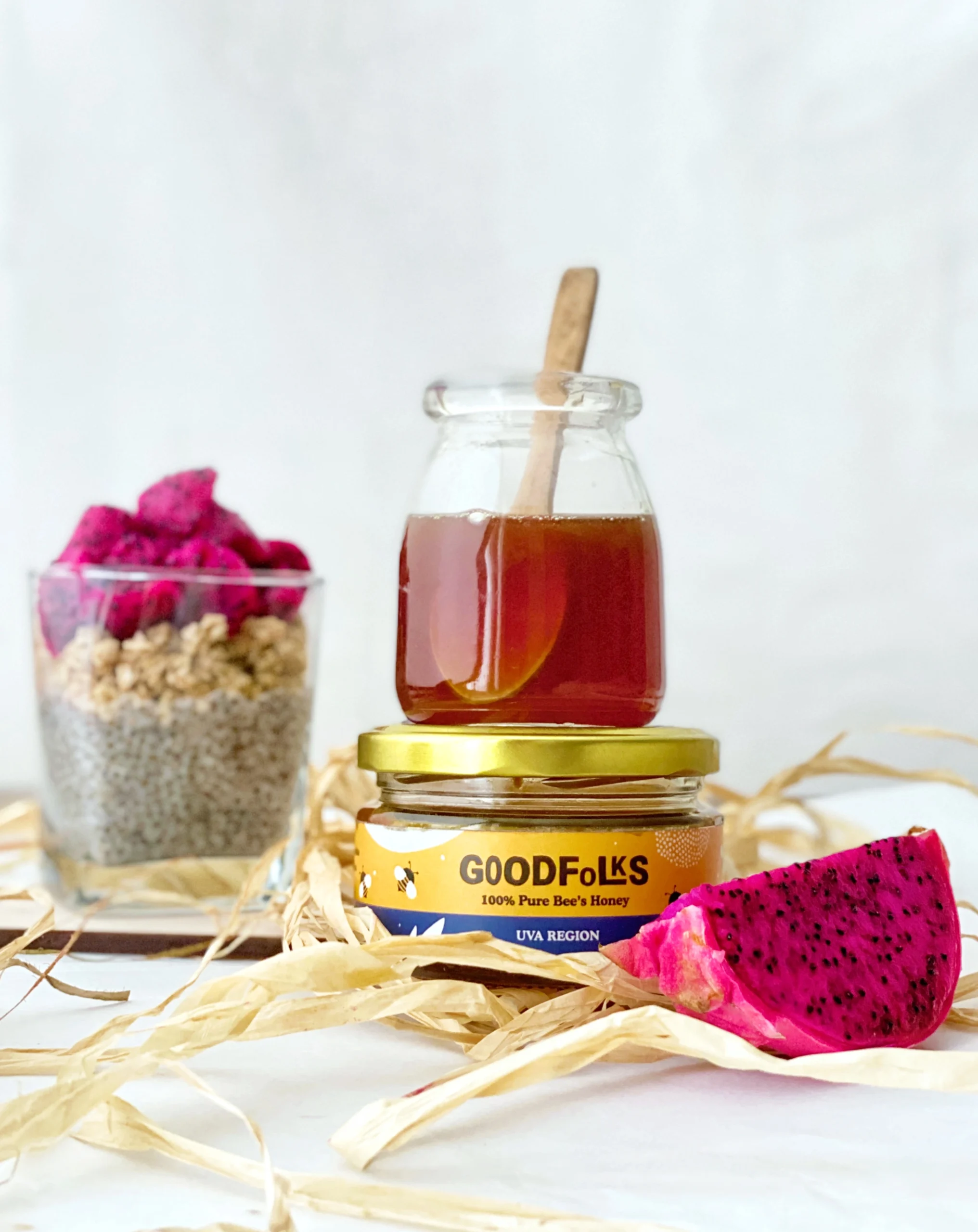
Amber
From rolling hills to mountains, where pear, avocado and red gum bloom alongside wild forest. Fruity, balanced and silky.
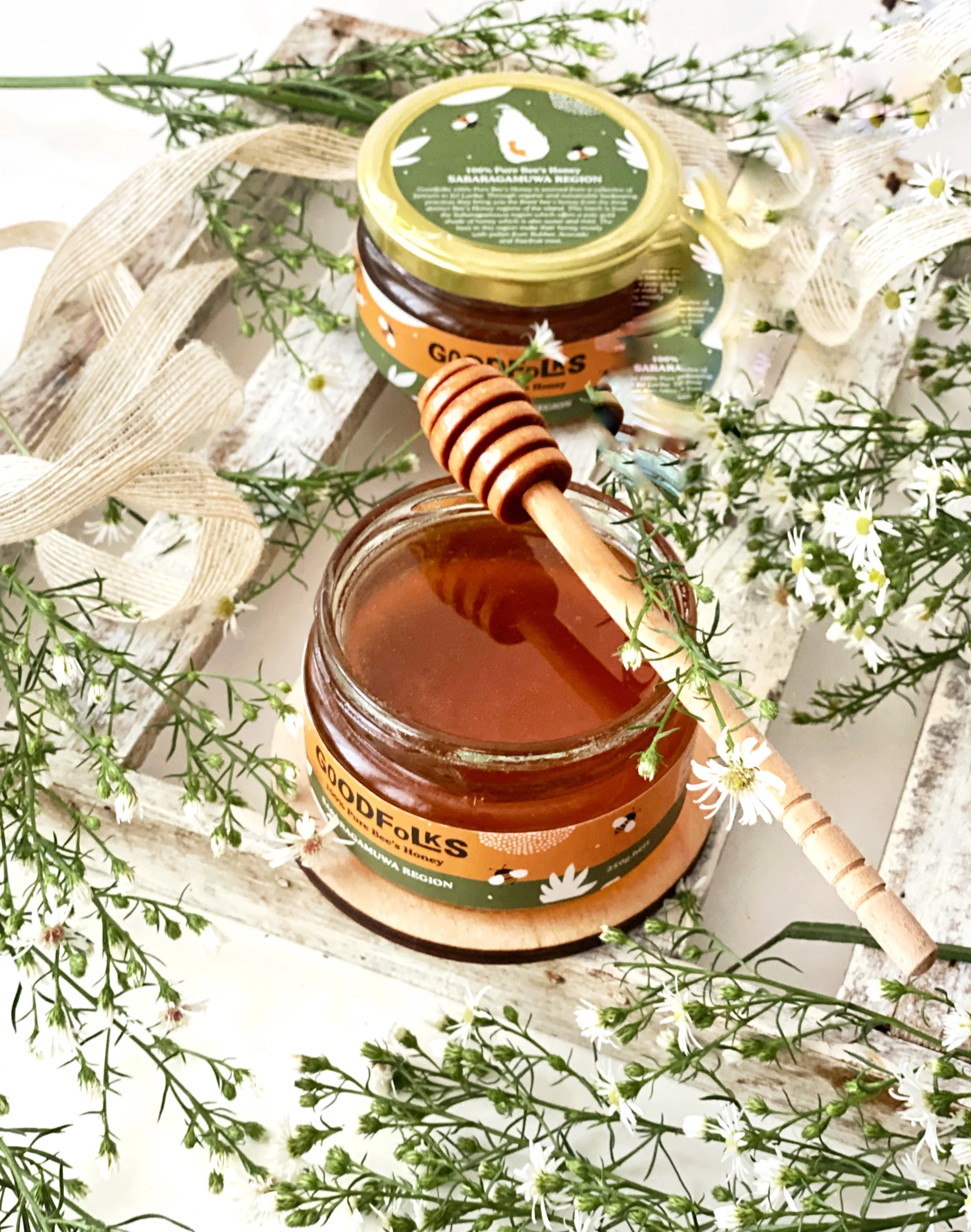
Gold
Bordering Sinharaja rainforest[5]. Palms, mango, star fruit and the first leaves of the rubber trees. Pale, buttery, delicate. A short, seasonal harvest.
Never the same twice
Many of the world’s most treasured honeys are prized for coming from one flower or one tree. That consistency is part of their beauty. Ours is prized for the opposite. Each harvest tends to carry different pollen depending on what is in season, so even two batches from the same region can taste different. We don’t blend that away. We think it’s the point.
What mass-market honey often loses
Much of the honey sold around the world is heated, finely filtered and blended from many origins so that every jar looks and tastes identical. Some is worse than that. When the European Commission tested honey imported into the EU in 2021–22, 46% of the 320 samples were suspected of being bulked out with cheap sugar syrups, and some had pollen removed to hide where they came from[6].
Our honey is raw, filtered only to remove debris, never homogenised, and traceable to its region and harvest. It is what it is: honey from one island, as the bees made it.
The honest part
You won’t find a pollen certificate from us today, and we’d rather tell you why than dress it up.
Sri Lanka’s botanical richness isn’t our claim. It’s recorded by the country’s own national flora surveys and by international conservation bodies[1][2][3]. What hasn’t been done is the systematic work of mapping which of those plants end up in Sri Lankan honey, region by region and season by season. A handful of university studies have made a start[7][8], but most Sri Lankan honey is still sold as one undifferentiated product, with no region and no story.
That’s the work we’ve taken on. In 2020 we became the first to present Sri Lankan honey as a collection named by region. The next step is pollen analysis of our harvests, so that what the island has always known can be documented and shared.
Honey as heritage
Honey has long been part of Sri Lanka’s traditional medicine, held within Ayurveda and Hela Vedakama (Deshiya Chikitsa), the island’s own healing tradition, as both a remedy and a carrier for herbs[4]. We honour that tradition and credit it to its custodians.
In our documentary A Forest Full of Medicine, an Ayurveda physician and a leader of the Vedda, Sri Lanka’s indigenous forest people, share what the forest has always given them, honey included.
The Goodfolks way
We don’t take honey from wild colonies. Every hive lives in a home garden or forest buffer zone, kept to regenerative practice.
We work directly with our beekeepers, pay above market, and support them with bee boxes, training and markets.
Bees pollinate the plants that feed and heal us. In a warming world, they are a first line of defence.
Taste it. Stock it. Share it.
Buyers & distributors: 400g · 300g · 150g · 55g jars and gift packs, for retail, hospitality and gifting. Formats can be customised.
At Global Food Week 2026: Honey Bar HS-03 (Hall 11) and the Sri Lanka Pavilion, Booth 7-060 · 6–8 October · ADNEC Abu Dhabi.
عذرًا على عربيتنا المتواضعة، فكل ما في الأمر أننا متشوّقون لتعرفوا قصتنا.
ليست شجرة واحدة، بل جزيرة بأكملها.
إذا تذوّقتم عسلنا في أسبوع الغذاء العالمي 2026 في أبوظبي، فلعلّكم لاحظتم أن أنواعنا الثلاثة لا تتشابه في طعمها. الجزيرة نفسها، والنحلة نفسها، وثلاثة أنواع مختلفة تمامًا من العسل.
سريلانكا جزيرة صغيرة تقع ضمن واحدة من 36 بؤرة للتنوّع البيولوجي في العالم. تضمّ أكثر من 3,000 نوع من النباتات المزهرة الأصلية، ربعها تقريبًا لا ينمو في أي مكان آخر على وجه الأرض، ونحو 1,400 منها ذات قيمة في طبّها التقليدي. ترعى نحلاتنا بحرية بين هذه النباتات، في الحدائق المنزلية وأطراف الغابات التي يعتني بها مزارعون ندفع لهم أعلى من سعر السوق.
ثلاث مناطق. ثلاثة أنواع من العسل الخام.
- الداكن — المنطقة الجافة: ترابيّ وقويّ، بلمسة مرارة مميّزة في نهايته.
- الكهرماني — مرتفعات أوفا: فاكهيّ ومتوازن وحريريّ.
- الذهبي — سابارغاموا، المنطقة الرطبة: فاتح وزبديّ ورقيق. حصاد موسميّ قصير.
لا يتكرّر أبدًا.
يحمل كل حصاد حبوب لقاح ما يزهر في موسمه، لذا تختلف حتى الدفعات من المنطقة نفسها. ولا نمزج هذا الاختلاف لنخفيه. عسل خام، غير مُجانَس، ويمكن تتبّعه إلى منطقته وموسم حصاده.
العسل إرث.
منذ قرون، احتلّ العسل مكانة في قلب الطب التقليدي في سريلانكا. تعرّفوا على طبيب الأيورفيدا وأحد قادة مجتمع الفيدا اللذين يحملان هذه المعرفة، في سلسلتنا الوثائقية «غابة مليئة بالدواء» أعلاه.
للاستفسارات التجارية والتوزيع: واتساب +94 74 000 8248 · 400 غ · 300 غ · 150 غ · 55 غ · علب هدايا · أحجام حسب الطلب.
Sources
- Critical Ecosystem Partnership Fund, Western Ghats & Sri Lanka Biodiversity Hotspot
- Biodiversity Secretariat, Sri Lanka, The National Red List 2020: Flora of Sri Lanka
- Sri Lanka’s 6th National Report to the Convention on Biological Diversity (flowering-plant endemism ~23%)
- Gunawardana et al. (2019), Medicinally Important Herbal Flowers in Sri Lanka, Evidence-Based Complementary and Alternative Medicine
- UNESCO World Heritage Centre, Sinharaja Forest Reserve
- European Commission “From the Hives” action, via Food Safety Magazine
- Wayamba University of Sri Lanka, Pollen Analysis of Natural Bee Honeys from Different Regions of Sri Lanka
- University of Vavuniya, Pollen source foraging preference of Apis cerana in the Endane corridor, Sinharaja