


Sri Lanka is one of very few countries where traditional medicine isn’t a fringe “alternative”. It’s written into law, funded by the state, taught in national universities and practised in government hospitals, right alongside Western medicine. This guide explains how that happened, what it has survived, why the science seems to lag, and how the whole system is run today.
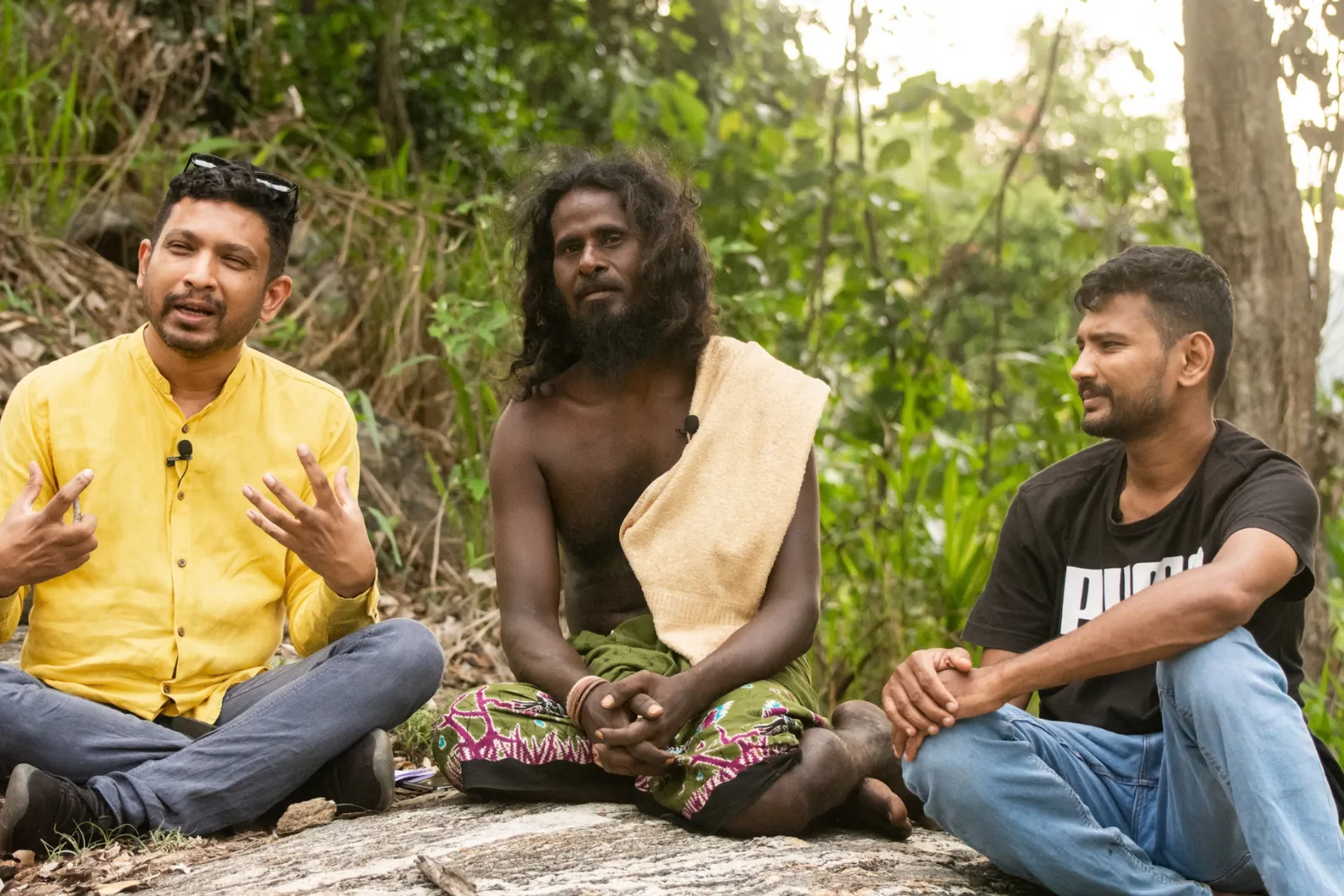
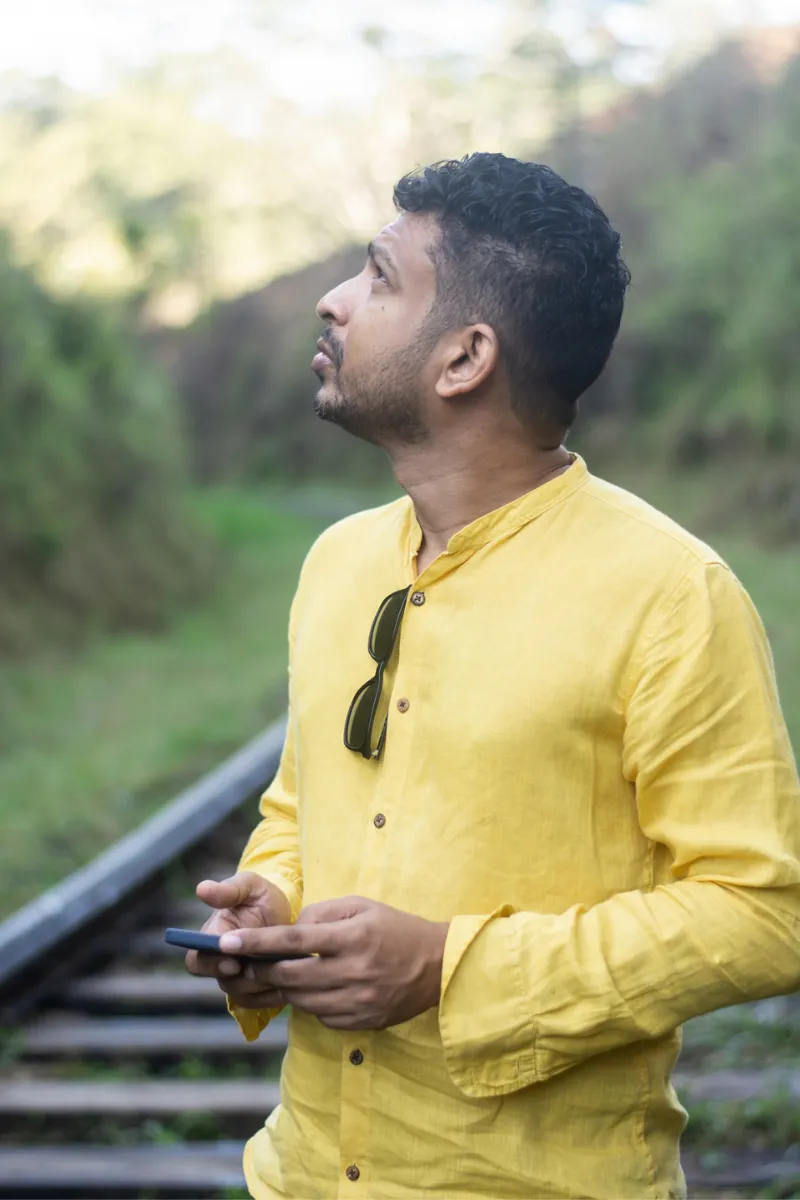
Why I built this page
I spent years working on international brands. Somewhere along the way I noticed that the stories that most needed telling were the ones with no ad budgets behind them.
My own life was shifting around the same time. I was becoming more conscious of what I bought, how I lived and how I treated the world, and much of what surrounded me no longer sat right. What did feel right was what I found in our villages. People there work with nature, and old wisdom still guides the way forward.
I lost my parents to a mix of high blood pressure, diabetes, arthritis and cholesterol. I watched them being medicated for years, and almost no one talked about their lifestyle or what the drugs themselves were doing to them. My quarrel isn’t with Western medicine. It’s with the parts of the system that put profit ahead of healing.
Ayurveda and Hela Wedakama are slow, whole-person and woven into daily life. Our minds have been trained to think another way, so there’s little room left for that kind of knowledge to become lived experience again. The same is true of our ingredients, our farmers’ knowledge, and the wisdom behind how we plant and harvest. None of it has a real place in the modern world, and that is the modern world’s loss.
Goodfolks is my attempt to make that room. Building it hasn’t been one challenge but a new one every day. It has meant changing systems and creating infrastructure that simply didn’t exist.
This page is part of that work. The knowledge is scattered, so I wanted one place where anyone, anywhere, can begin to understand Hela Wedakama and Sri Lankan Ayurveda, and through that, help carry more of Sri Lanka’s healing out into the world.
— Dee
In 60 seconds
- Sri Lanka runs two main state health streams: Western (allopathic) medicine and indigenous medicine. Both sit under the Ministry of Health.
- Here, “Ayurveda” is an umbrella for four traditions: Ayurveda, Siddha, Unani and Deshiya Chikitsa (Hela Wedakama, the island’s own medicine).
- Beneath all of it sits the forest knowledge of the Vedda (Wanniyala-Aetto), Sri Lanka’s indigenous people.
- The legal backbone is the Ayurveda Act, No. 31 of 1961, overhauled in 2023.
- Colonial rule, global patent regimes and drug trials designed for single molecules have all pushed this knowledge to the margins.
- The system runs from a national ministry and department, through nine provincial departments, down to community level.
A living document. Help us get it right. This page pulls together information scattered across ministries, universities, research and news. If you’re a practitioner, researcher, official or reader and you spot anything incomplete or incorrect, write to connect@goodfolks.shop. We read every comment and correction and update the page as they come in.
1. Two health streams, one country
In most countries, “medicine” means one system, and traditional healing, if it’s recognised at all, lives outside it. Sri Lanka took a different road. Indigenous medicine here is a state health service in its own right. It has its own Act of Parliament, its own government department, a medical council that registers practitioners, a national hospital, a research institute and a public medical service.
The Health Minister has made the point directly: the Ministry of Health answers for Ayurveda, Siddha and Unani as well as Western medicine (Ada Derana, July 2025). In 2024, Cabinet also approved the country’s first single National Policy on Indigenous Medicine, running to 2034 (Xinhua via Capital FM).
New doctors appointed to the Sri Lanka Ayurvedic Medical Service in a single intake. It was the largest recruitment into the sector since 2018 (Ada Derana).
“Equal”, on paper and in practice
On paper, the two streams stand side by side. Ministers have long described indigenous medicine as recognised by the state on equal terms with Western medicine (Ministry of Foreign Affairs).
Day to day, it’s less even. As The Morning has reported, Ayurveda still carries a lower status within the medical establishment, and the respect runs one way. Ayurvedic practitioners readily accept Western treatment, while Western-trained doctors are barred by their own regulator from recommending other systems (The Morning). Sri Lanka has built something rare, and it’s still working out what parity should mean.
Homoeopathy is also separately regulated in Sri Lanka, on a much smaller scale. This guide focuses on the two main streams.
2. What “Ayurveda” means in Sri Lanka
Outside Sri Lanka, “Ayurveda” usually means the classical Indian system. Here the word does more work. Officially, it covers four traditions (Central Provincial Department of Ayurveda):
| Tradition | Roots | In Sri Lanka today |
|---|---|---|
| Ayurveda | The classical Sanskrit system of the Indian subcontinent | The largest stream; taught at the University of Colombo and the Gampaha Wickramarachchi University |
| Siddha | The Tamil medical tradition of South India and northern Sri Lanka | Taught mainly at the University of Jaffna; strong in the North and East |
| Unani | Greco-Arabic medicine, carried by Muslim physicians | Taught at the University of Colombo and practised within Muslim communities |
| Deshiya Chikitsa (Hela Wedakama) | Sri Lanka’s own indigenous medicine, handed down through families of hereditary physicians | Practised by traditional vedamahattayas and formally recognised within the system |
Hela Wedakama sits at the heart of this. In Sri Lankan tradition it’s an island-born system, older than and distinct from the Indian Ayurveda that later blended with it. It holds specialist lineages for bone-setting, snakebite, eye care, fractures and burns. Most of it lives in families and palm-leaf manuscripts rather than textbooks, which makes it both priceless and fragile.
Hereditary physicians are still fighting for their place. In 2025, questions raised in Parliament asked how they could be certified and supported, and whether university-trained officers understand their practice at all (Parliament of Sri Lanka).
The first keepers: the Vedda community
Long before any of these systems had names, the forest had keepers. The Vedda, who call themselves the Wanniyala-Aetto, “forest beings”, are Sri Lanka’s indigenous people. By tradition, their ancestry runs back to the island’s prehistoric inhabitants (Minority Rights Group).
Their knowledge of forest plants, animals, honey and healing has been passed down by word of mouth, from one generation to the next (FAO). There are no manuscripts for most of it, only people. Some of the plants that later found their way into village medicine and the formal systems were first known, gathered and understood in their forests.
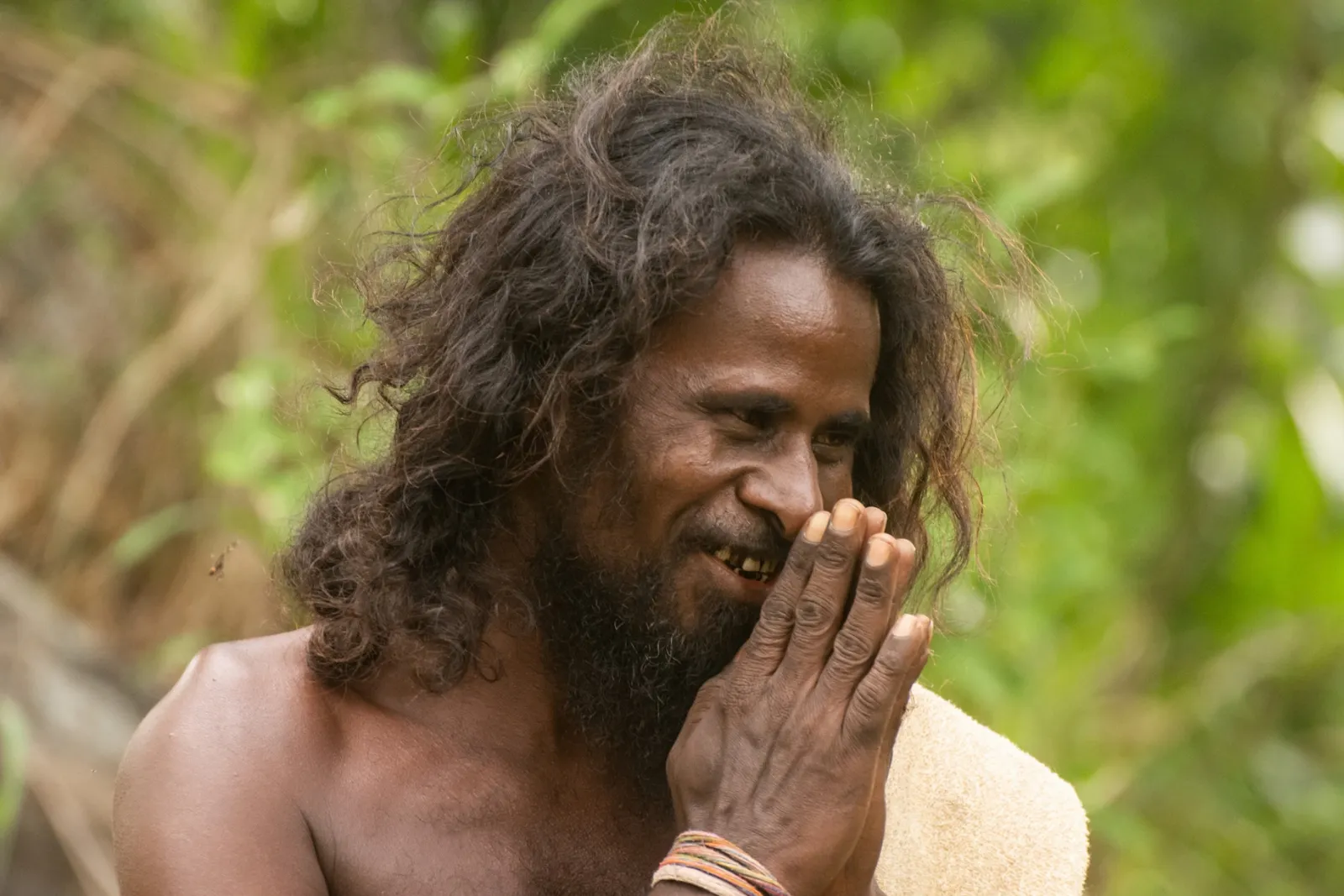
That knowledge has paid a heavy price for “development”. In 1948 the Gal Oya irrigation scheme flooded some of their best hunting grounds (FAO). Then came the Mahaweli scheme. In 1983 their last large forest territory was declared the Maduru Oya National Park, and many families were moved into rice-farming settlements. People who had looked after the forest for millennia became, overnight, trespassers and “poachers” on their own land (vedda.org; Sunday Observer).
hectares
The area of Wanniyala-Aetto customary land turned into the Maduru Oya National Park, cutting the community off from ancestral forests, hunting grounds and sacred sites (Minority Rights Group).
Any honest account of Sri Lankan healing has to start with them. Their elders still hope the next generation will keep the knowledge and identity that has been handed down for centuries. Every time that knowledge is lost, the island loses a library it can never rebuild.
Medicinal plant species identified in Sri Lanka. Only a small share have ever been studied as sources of medicine (peer-reviewed review, 2021).
3. A short history: from Mihintale to the Ayurveda Act
An ancient public-health culture
Sri Lanka’s medical heritage is old, and it’s also institutional. Chronicles, inscriptions and excavations point to hospitals attached to monasteries as far back as the 4th century BCE (London School of Hygiene & Tropical Medicine). Kings were expected to know and fund medicine, and the village physician was a respected figure.
century
King Sena II built the hospital at Mihintale. Its ruins are counted among the oldest hospital remains anywhere on earth. You can still see the stone trough where patients were immersed in medicinal oils (overview).
The colonial centuries (1505–1948)
The Portuguese, Dutch and British each brought hospitals built around European medicine. Under the British it became the state’s default: the medicine of government hospitals, the colonial medical service and the Colombo Medical School, founded in 1870. Indigenous physicians went on treating most of the population, but largely outside official structures.
It wasn’t a story of simple suppression. Historians note that Ceylon reached an unusual accommodation with indigenous medicine compared with other colonies (review of Margaret Jones, Health Policy in Britain’s Model Colony). Still, the hierarchy was plain. British doctors leaned on local physicians’ knowledge of tropical illness while treating that knowledge as inferior (Royal College of Physicians).
The fight back (1891–1961)
Recognition was won by Sri Lankans, not handed to them. Associations formed to defend indigenous medicine, starting with the Sinhalese Medical Association in 1891 and the Sri Lanka Vaidya Maha Mandalaya in 1901. A 1926 committee recommended a dedicated college, and the College of Indigenous Medicine opened in Borella in 1929 (Faculty of Indigenous Medicine, University of Colombo). That same year, Pandit G.P. Wickramarachchi founded the Siddhayurveda college in Gampaha, now a national university (GWUIM).
When the College of Indigenous Medicine opened on 10 June 1929, it taught Ayurveda, Siddha and Unani side by side. Sinhala, Tamil and Muslim healing traditions were trained together from day one (University of Jaffna).
Independence and the Ayurveda Act (1948–today)
After independence, the Ayurveda Act, No. 31 of 1961 created the structure that still runs the sector: a Department of Ayurveda, a medical council to register practitioners, and a framework for education and research (full text, LawNet).
A year later came the Bandaranaike Memorial Ayurveda Research Institute, a memorial to the late Prime Minister. India’s Jawaharlal Nehru personally corresponded with Sirimavo Bandaranaike to support it (Nehru Archive).
In 2023 the Act was overhauled. The amendment created the post of Commissioner-General, widened the recognised courses and re-graded Ayurveda hospitals (Ayurveda (Amendment) Act, No. 19 of 2023).
4. The pressures: colonialism, capitalism and the patent office
Ayurveda’s story belongs to a global one. Wherever colonial powers arrived, local healing was relabelled as superstition, and Western medicine became the only medicine that counted.
The same pattern, everywhere
- Southern Africa. South Africa’s Witchcraft Suppression Act of 1957, modelled on British and colonial anti-witchcraft laws, pushed traditional healers into a criminal category. Healers’ organisations are still campaigning for its repeal (overview; Nova News).
- Colonial India. Historians describe how Western medicine, backed by state power, sidelined indigenous systems as “primitive” (Indian Journal of History of Science, 2018). Some argue it served the colonial economy itself (York University).
- The Americas and Australasia. Indigenous peoples saw their ceremonies and plant medicines restricted, and their knowledge “rediscovered” later by industry.
From suppression to extraction
After independence the pressure changed shape. Traditional knowledge stopped being dismissed and started being taken.
In 1995 the US Patent Office granted a patent on using turmeric to heal wounds. India got it overturned in 1997 by proving the use was centuries old, then built a Traditional Knowledge Digital Library so it couldn’t happen again (Imphal Review). Sri Lanka has no equivalent.
This native plant (Salacia reticulata) has long been used in Sri Lankan medicine for blood sugar. More than 50 patents on it are held abroad. Sri Lanka holds one (The Island).
Magul karanda, masbadda, heen bovitiya and weniwalgeta have all been patented abroad too, mostly in Japan (peer-reviewed review, 2021; Daily Mirror). The knowledge comes from forest communities and village physicians. The value goes to whoever isolates a compound and files the paperwork. Reporters were warning about Sri Lankan plants being smuggled out and patented abroad as early as 1998 (IPS).
The quieter loss, at home
Some of the damage came from inside. Forest loss, over-harvesting and the drift away from village life have thinned out both the plants and the people who know them. The displacement of the Vedda from their forests (see section 2) is the starkest example: when a forest people lose their forest, their medicine goes with it.
That’s roughly what Sri Lanka spends importing medicinal plants such as aralu and bulu, which experts say could be grown at home (Department of Government Information).
5. Why the research “lags”, and why that isn’t the whole story
The most common criticism of Ayurveda is that it “lacks evidence”. Where that gap comes from matters.
The tool doesn’t fit the job
Modern medicine’s gold standard is the randomised controlled trial. It was built to test one standardised drug against a placebo, for one disease, across many similar patients. For a new pharmaceutical molecule, it works brilliantly.
Ayurveda works differently. Two people with the same diagnosis may get different treatment, because it treats the person and their constitution, not only the disease. Herbs, diet, daily routine and therapies are used together, so pulling one piece out to test it alone changes the thing you’re testing. A single formula may contain many plants, each prepared in a particular way.
Researchers inside the field say the problem isn’t a shortage of trials so much as trial designs that don’t fit the medicine (Journal of Ayurveda & Integrative Medicine). Many now argue for “whole-system” designs that adapt the method to the medicine rather than the reverse (JAIM; Gautama, 2021; JAIM).
The money doesn’t fit either
Large trials cost tens of millions, and drug companies fund them because a patented molecule can earn that back. A traditional formula held in common by a culture can’t be patented the same way, so nobody has a commercial reason to pay for the trial.
That creates a loop. No patent means no big trial. No big trial means the claim gets called “unproven”, and unproven claims get restricted on labels and in markets. Meanwhile a foreign company can isolate one compound from the same plant, patent it and fund its own trial.
Sri Lanka’s own research capacity is thin, too. A 2023 regional review noted that the country still lacks several dedicated research and safety-monitoring bodies for traditional medicine (BIMSTEC Traditional Medicine Report, 2023).
The global mood is shifting
In May 2025 the World Health Assembly adopted the WHO Global Traditional Medicine Strategy 2025–2034 (WHO). Its goals are to build a stronger evidence base, ensure safety and regulation, integrate traditional medicine into health systems, and unlock its wider value. The message has moved from “prove it or drop it” towards “let’s build better ways to prove it”.
How we handle claims at Goodfolks. When we describe how an ingredient is used, we credit the tradition it comes from, as in “In Ayurveda, gotu kola is used to…”. Where modern research exists, we add it alongside. We don’t present tradition as clinical proof, and we don’t dismiss it because nobody has paid for the trial.
6. How the system is run today: ministry to village
The sector runs on two tracks. Central government sets national policy and runs national institutions. Since the 13th Amendment to the Constitution in 1987, provincial councils run most local hospitals and dispensaries.
Structure as of October 2026. Ministry names and portfolios change with governments, so check the linked official sites for the latest.
Tier by tier
The Ministry. Indigenous medicine sits within the Ministry of Health and Mass Media, through a dedicated Indigenous Medicine Division. Past governments gave it a Ministry or State Ministry of its own; today it shares a minister with Western medicine. The sector is covered in the Ministry’s 2025 Performance Report.
The Department of Ayurveda. This is the national engine, created by the 1961 Act and led by a Commissioner-General (ayurveda.gov.lk). Its key arms:
- The Ayurveda Medical Council registers Ayurveda, Siddha and Unani practitioners, including traditional ones.
- The Bandaranaike Memorial Ayurveda Research Institute covers medicinal plants, drug quality, chemistry and manuscript research.
- The National Institute of Traditional Medicine runs in-service training for practitioners and officers.
- The Ayurveda Medicine and Production Regulatory Council, set up in 2024, oversees medicines and manufacturing (Gazette 2379/02).
- Seven research herbal gardens form part of a national medicinal plant programme (Department of Government Information).
Provincial departments. Since 1988 most day-to-day care has been run by the nine provinces. Each has a Provincial Department of Ayurveda (sometimes “Indigenous Medicine”), led by a Provincial Commissioner. They run the provincial, base and rural hospitals, the central dispensaries and the drug units. See the list of provincial departments, or examples from the Central Province and Northern Province.
District and community. This is where the system reaches people’s doorsteps. Municipal and urban councils also run Ayurveda dispensaries of their own.
Community Health Medical Officers now work across all nine provinces. The service was set up in 2008 to bring Ayurvedic prevention and health promotion into communities (BIMSTEC report; Central Province structure chart).
Universities. Practitioners train at national universities under the University Grants Commission:
- Faculty of Indigenous Medicine, University of Colombo (Ayurveda and Unani, since 1929)
- Gampaha Wickramarachchi University of Indigenous Medicine (a full university since 2021)
- Unit of Siddha Medicine, University of Jaffna
7. Bridging the gap: the Goodfolks approach
If the research system won’t come to traditional medicine, someone has to carry traditional medicine to the world in a form people can trust.
Goodfolks was founded in 2020 on the Mandala Model, which treats value flowing back to farmers and rural communities as business architecture rather than charity. In practice, we say where each ingredient comes from, who grew or gathered it, and how. We credit the tradition behind each use instead of turning it into a marketing claim. Where modern research exists, we add it alongside. And we make sure recognition turns into income for the people who hold the knowledge: farmers, harvesters, practitioners, and the indigenous and forest communities whose knowledge often came first.
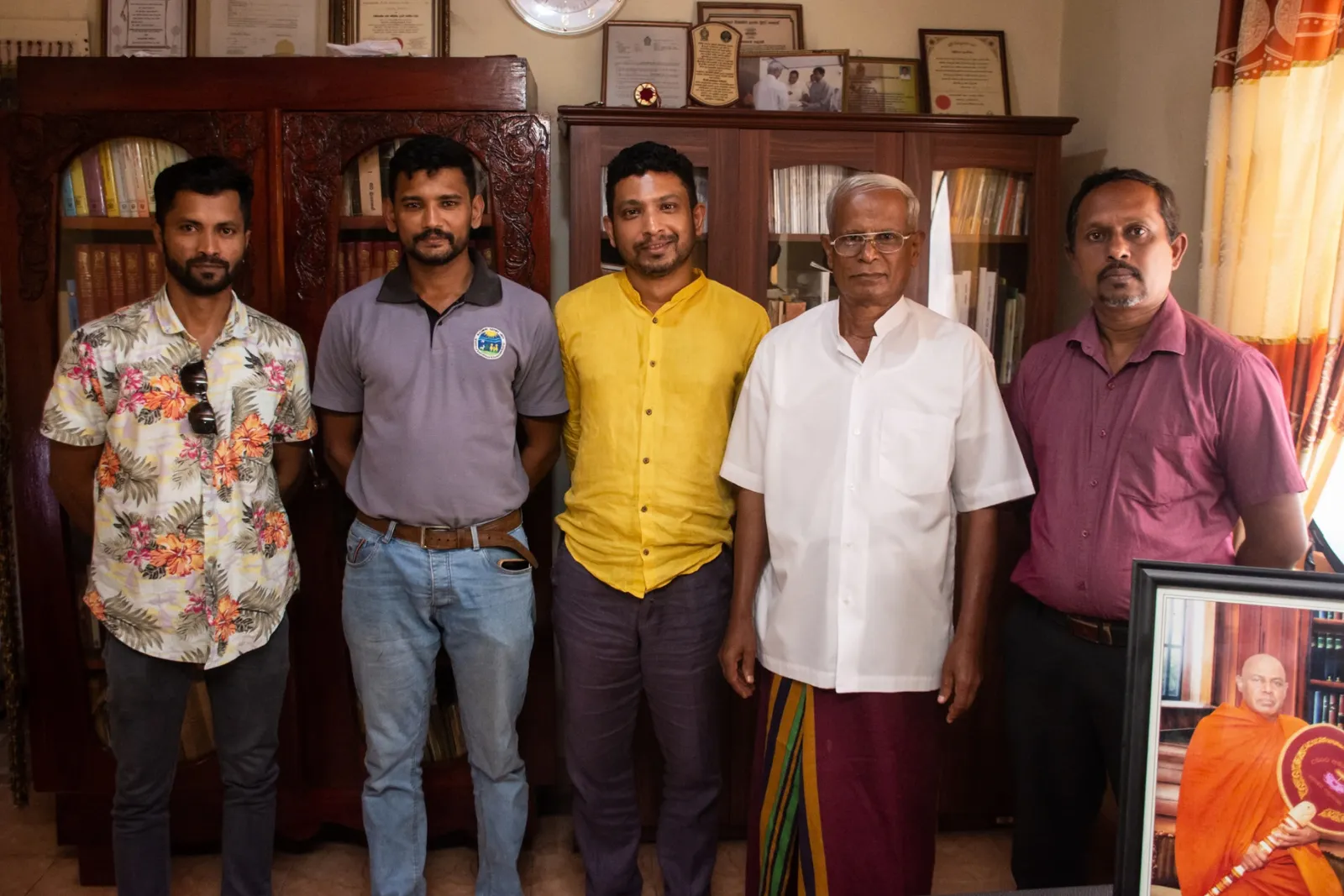
A Forest Full of Medicine
Our documentary series, A Forest Full of Medicine, is one of the ways we’re trying to close the gap. It goes into Sri Lanka’s forests and villages to meet the people and plants behind indigenous medicine, from forest communities to Ayurvedic doctors. It records knowledge that rarely reaches a textbook, let alone a clinical trial.
The thinking behind it runs in three steps. First, awareness: more people around the world see and understand this knowledge. Then recognition, as understanding turns into respect, demand and fair value. Finally, economic benefit, flowing back to the indigenous and forest communities, growers and practitioners who kept this medicine alive.
Every Goodfolks product rooted in these traditions links back to this page. The product pages tell each ingredient’s own story. This page holds the context behind all of them.
8. Frequently asked questions
Is Ayurveda officially recognised in Sri Lanka?
Yes. It’s governed by the Ayurveda Act, No. 31 of 1961 (amended 2023), run by a government Department of Ayurveda under the Ministry of Health, and practised in state hospitals by registered doctors.
Does Sri Lanka really have two official health systems?
Yes. Western (allopathic) medicine and indigenous medicine both run as state services under the Ministry of Health, each with its own regulator, hospitals and medical service. Homoeopathy is also regulated, on a much smaller scale.
What is the difference between Ayurveda and Hela Wedakama?
Ayurveda is the classical system shared with the Indian subcontinent. Hela Wedakama (Deshiya Chikitsa) is Sri Lanka’s own indigenous medicine, handed down through families of hereditary physicians. In Sri Lanka both sit under the “Ayurveda” umbrella, together with Siddha and Unani.
Who are the Vedda, and how do they fit in?
The Vedda, or Wanniyala-Aetto (“forest beings”), are Sri Lanka’s indigenous people. Their forest knowledge of plants and healing, passed down orally, is one of the oldest roots of healing on the island. Much of their land was lost to irrigation schemes and the 1983 Maduru Oya National Park.
Who regulates Ayurveda doctors in Sri Lanka?
The Ayurveda Medical Council, set up under the Ayurveda Act, registers Ayurveda, Siddha and Unani practitioners.
Where can you study Ayurveda in Sri Lanka?
At the Faculty of Indigenous Medicine (University of Colombo), the Gampaha Wickramarachchi University of Indigenous Medicine, and, for Siddha, the University of Jaffna.
Why is there less clinical research on Ayurveda than on modern drugs?
Standard drug trials are built to test one patented molecule for one disease. Ayurveda uses individualised, multi-herb, whole-system treatment, and traditional formulas can’t be patented to pay for large trials. New whole-system research methods and the WHO’s 2025–2034 strategy aim to close the gap.
9. Further reading: the source library
Everything we drew on, grouped by type, so you can go deeper.
Government & law
- Ministry of Health and Mass Media, Sri Lanka
- Department of Ayurveda: BMARI · NITM · Provincial departments
- Ayurveda Medical Council
- Ayurveda Act, No. 31 of 1961 and the Ayurveda (Amendment) Act, No. 19 of 2023
- Ayurveda Medicine and Production Regulatory Council regulations (2024)
- Provincial Department of Ayurveda, Central Province
- Ministry of Health and Mass Media, Performance & Progress Report 2025
Universities
- Faculty of Indigenous Medicine, University of Colombo (history)
- Gampaha Wickramarachchi University of Indigenous Medicine (history)
- Unit of Siddha Medicine, University of Jaffna
Global policy
- WHO Global Traditional Medicine Strategy 2025–2034
- WHO Global Traditional Medicine Centre
- Traditional Medicine Systems of BIMSTEC Member States, 2023 (Sri Lanka chapter)
Research papers
- Does Ayurveda work? Research design challenges: Journal of Ayurveda & Integrative Medicine
- Whole-system research and Ayurveda: JAIM
- The RCT as a model for whole-systems Ayurveda: JAIM
- RCTs and other clinical trial designs in Ayurveda: Gautama, 2021
- Foundational principles of classical Ayurveda research: JAIM, 2013
- Biopiracy: abolish corporate hijacking of indigenous medicinal entities: 2021 review with Sri Lankan cases
- Non-wood forest products and Ayurveda in Sri Lanka: FAO
History
- Review: Health Policy in Britain’s Model Colony, Ceylon 1900–1948 (Margaret Jones)
- Vattoru-pota: a Sri Lankan doctor’s manual: Royal College of Physicians
- Earliest hospitals and tropical medicine: LSHTM
- Nehru’s 1962 letter on the Ayurveda research institute: Nehru Archive
- Indigenous and Western medicines in colonial South India: Indian Journal of History of Science
News & opinion
- Ayurveda: a system that has stood the test of time: The Morning
- Sri Lanka affected by bio-piracy menace: Daily Mirror
- Bio-piracy: The Island
- Sri Lanka: biopirates patent traditional wisdom: IPS, 1998
- Largest Ayurvedic recruitment since 2018: Ada Derana, 2025
- Sri Lanka endorses national indigenous medicine policy: Xinhua, 2024
Indigenous communities
- Wanniyala-Aetto (Veddhas) in Sri Lanka: Minority Rights Group
- Who are Sri Lanka’s indigenous Wanniya-laeto?: vedda.org
- Tribal community and forest resources: FAO
- Hunters without a forest: Sunday Observer
A note from us. We built this page for many reasons. One of them is simply to present the whole story in one place, for the first time. Pulling together this much history, law and research means there may be genuine errors. If you spot one, we’d be grateful if you’d point it out by email to connect@goodfolks.shop. We’ll review every note and update the page as they come in.
Last reviewed: October 2026.